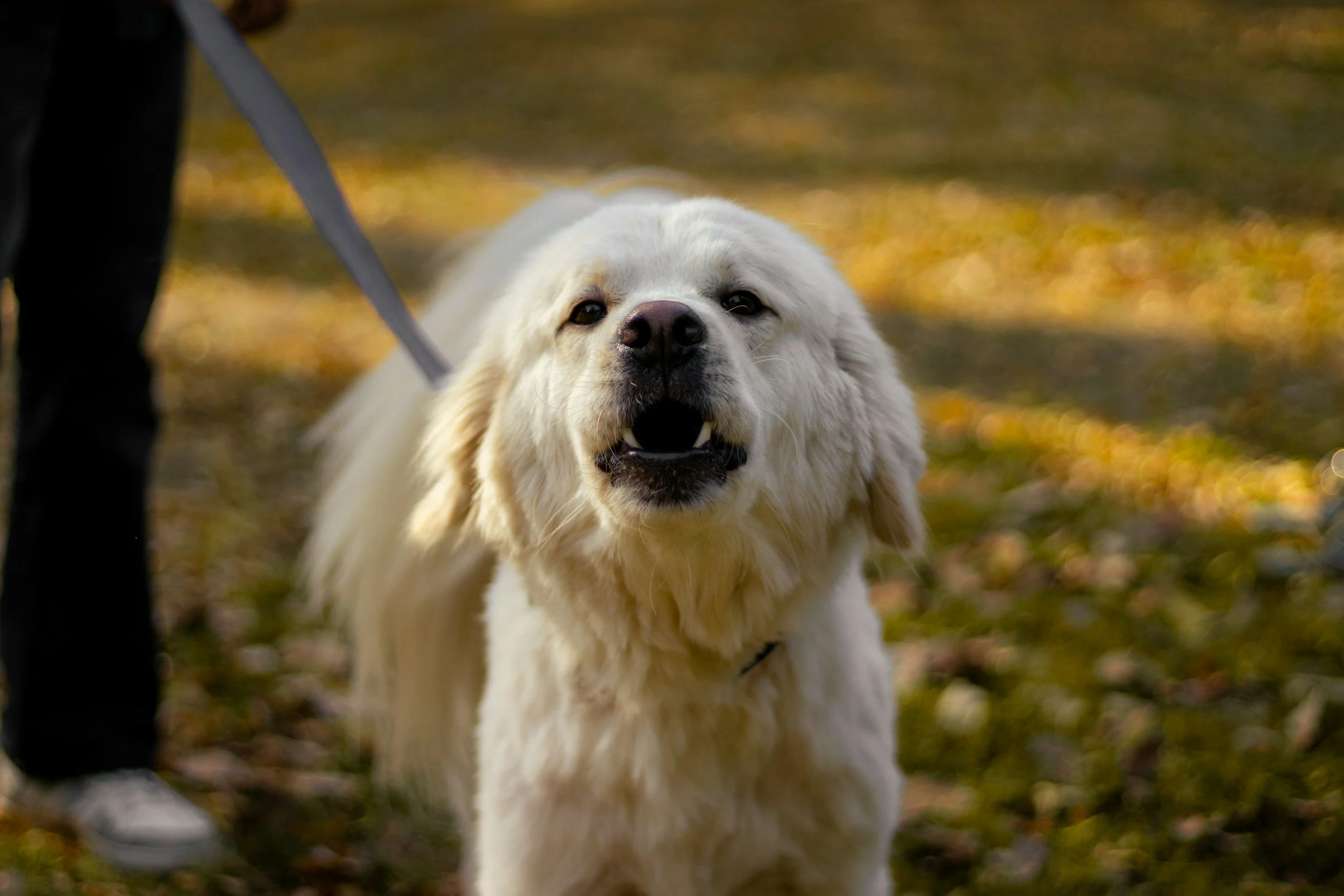
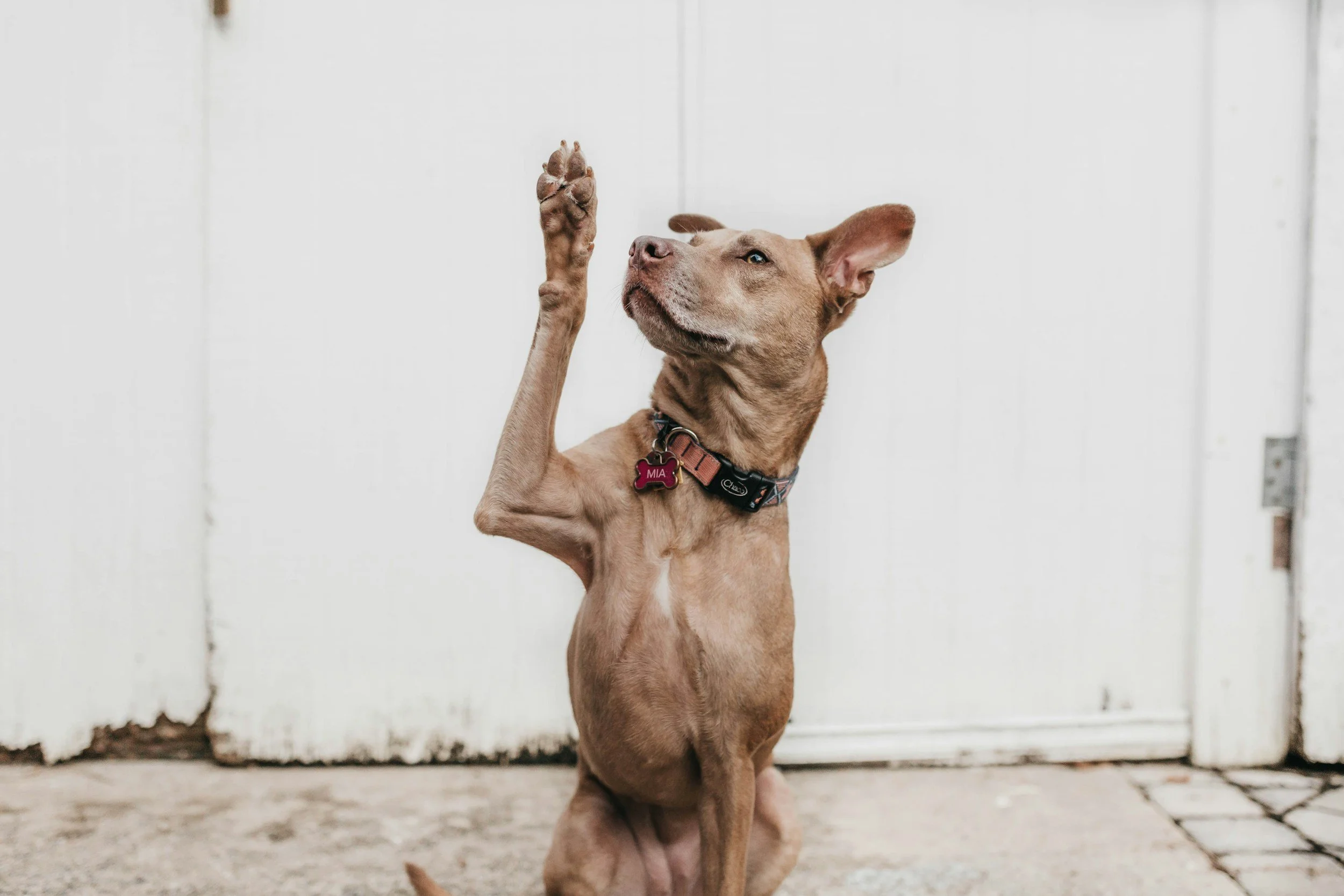
A short-haired, medium-sized, brown dog sits raising one paw as if she is asking a question. She is wearing a collar with a red, bone-shaped tag that reads “Mia.”
One of the most common questions I hear from dog owners is:
"Can in-home dog training help with my dog's specific behaviour problem?"
In-home dog training helps owners overcome a very long list of problem behaviours.
Some of the most common behavioural issues owners call about are:
-barking out the window
-charging the door and barking when guests arrive
-jumping on visitors
-stealing food off countertops (counter surfing)
-dragging owners down the sidewalk while on-leash and reacting at everything from dogs to blowing leaves
-chewing up things that aren’t theirs to chew
-separation anxiety
-nipping and biting
-losing their minds when the Amazon driver shows up
-bolting out the front door and running away
-fear of thunderstorms, fireworks, smoke detectors, construction noises, etc.
These behaviours can be frustrating, embarrassing, and sometimes even dangerous. Over time, they can affect your confidence as a dog owner and make everyday life feel more stressful than it needs to be.
The good news is that many of these issues can be improved significantly through in-home dog training.
When training happens where the behaviour occurs, we can address the root cause more effectively and create practical solutions that fit your real life.
Let's look at some of the most common behaviour problems that in-home dog training can help with.
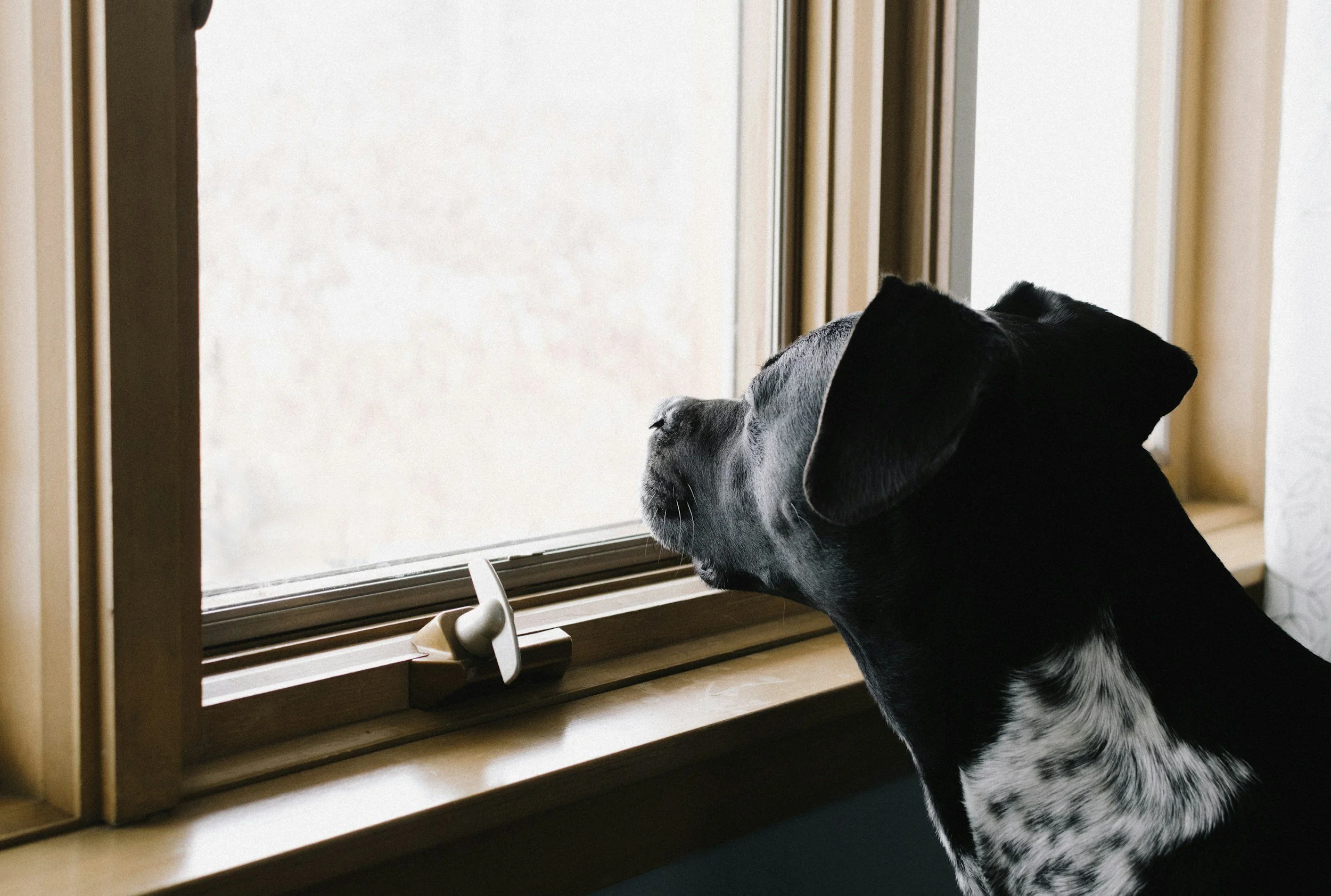
A black and white Staffordshire terrier staring out a window
Barking out the Window and at Neighbourhood Sounds
This is one of the biggest frustrations dog owners face.
A dog sees another dog walking by.
They bark.
A squirrel appears.
They bark.
Someone closes a car door three houses away.
They bark.
Soon, your dog is spending most of their day scanning the environment and reacting to every movement and sound.
Not only is this exhausting for you, but it's exhausting for your dog as well.
What many owners don't realize is that barking is a self-rewarding behaviour. It feel good to blow off steam, so they keep doing it.
In-home training helps interrupt this cycle by teaching your dog what to do instead.
Rather than rehearsing barking all day, they learn calm behaviours that create a more peaceful home environment.
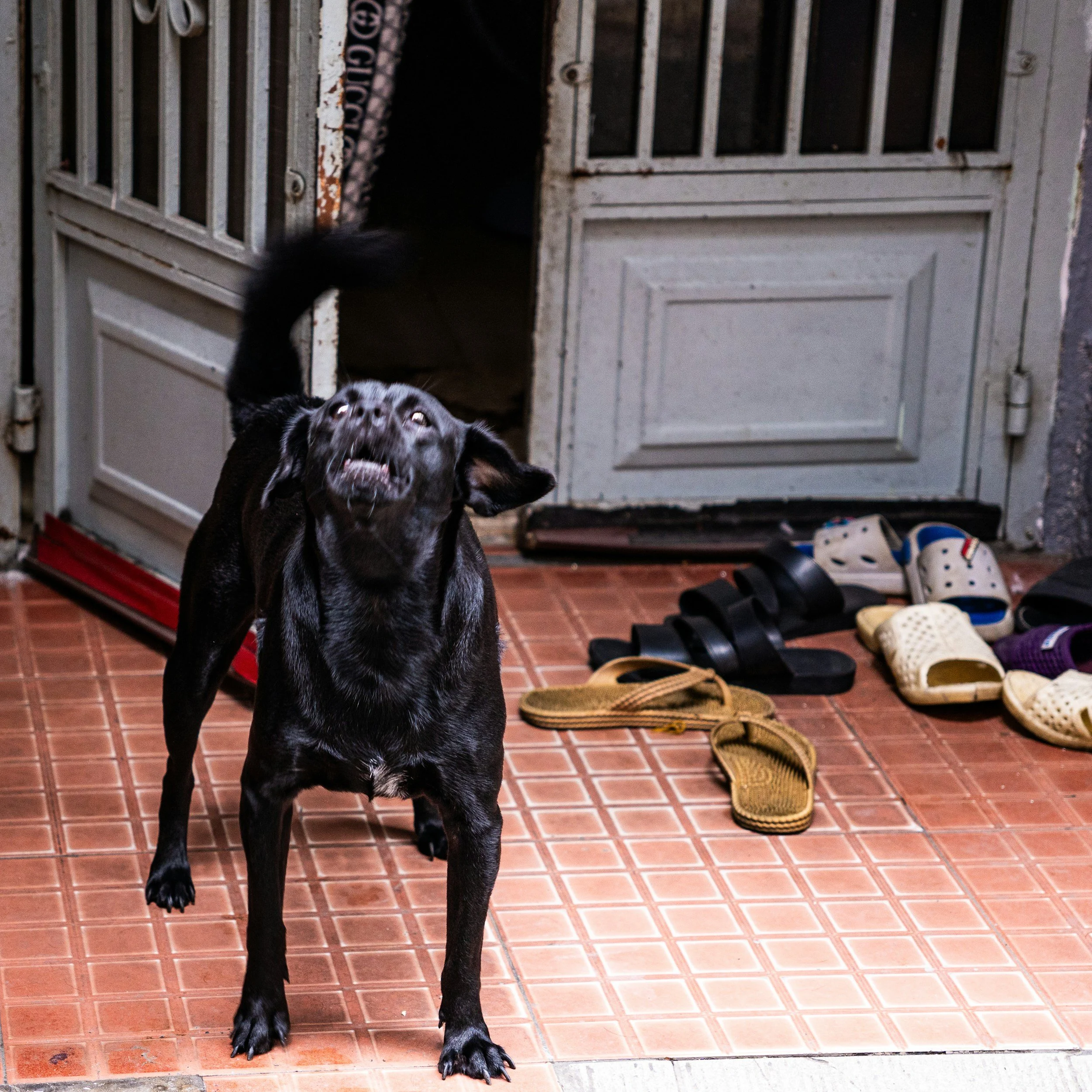
A black, off-leash dog barks intensely at the camera. He is standing on a tiled floor, in front of an open door. His tail is standing straight up in the air and the whites of his eyes are showing. This is likely a warning: don’t come any closer, but since I didn’t take the photo, I can’t know for sure.
Reactivity Toward Dogs and People
If your dog lunges, barks, growls, squeals, or becomes overly excited when they see dogs or people, you're not alone.
Reactivity is one of the most common reasons owners reach out for help.
Many people assume they need to expose their dog to more dogs in a group setting.
Often, the opposite is true.
Before dogs can make good decisions around distractions, they need clarity, structure, and communication.
In-home training allows us to build those foundational skills first.
When dogs learn how to focus, settle, and respond to guidance at home, those skills become much easier to transfer into the real world.
The result is a dog who can remain calmer and more composed during walks and social situations.
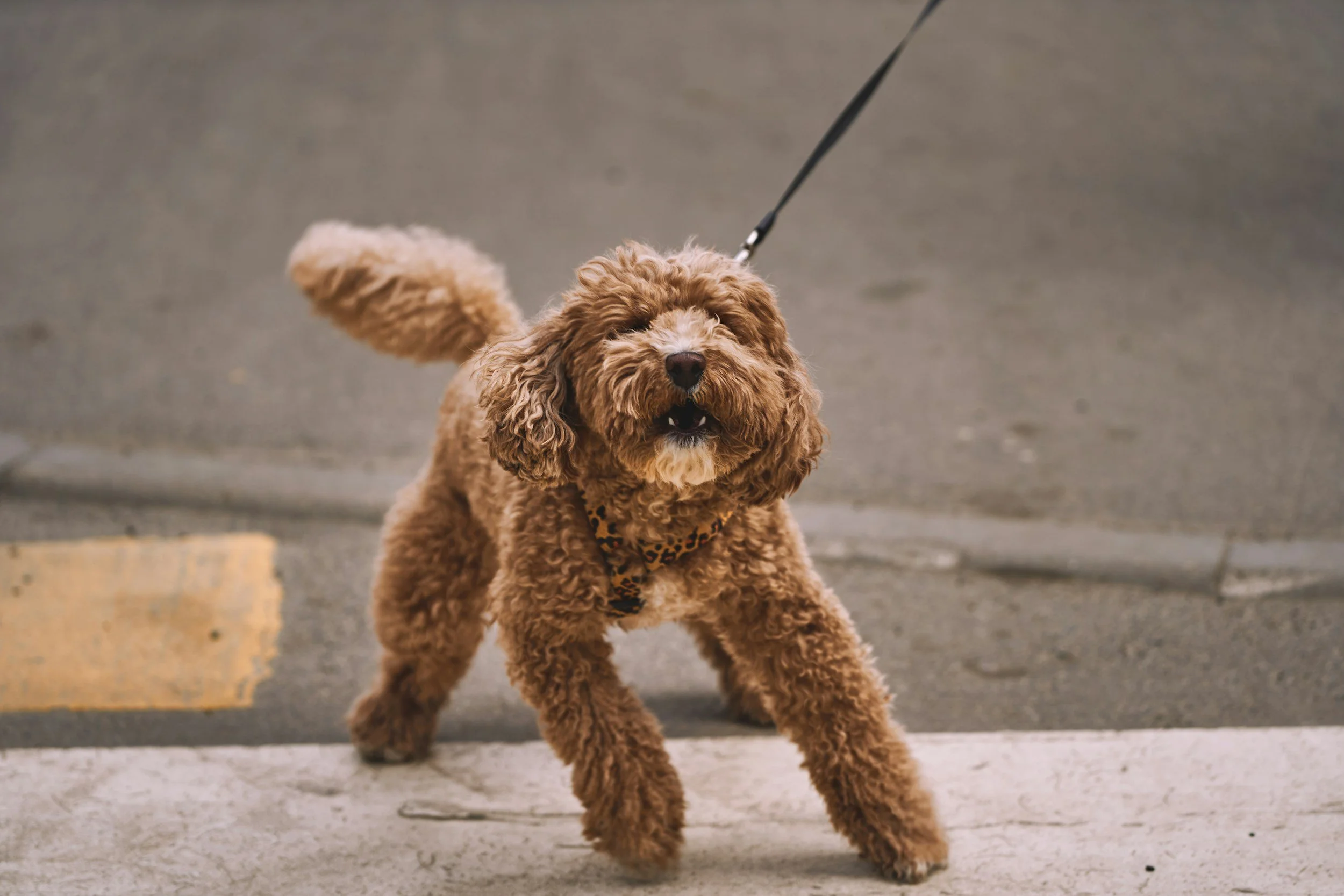
An on-leash brown doodle barks and lunges toward the camera.
Pulling on the Leash
Walking your dog should be enjoyable.
Unfortunately, many owners find themselves being pulled from one tree to the next while their dog zigzags down the sidewalk.
Over time, walks become frustrating.
Some owners start avoiding them altogether.
And when that happens, behaviour problems often get worse.
In-home dog training addresses leash pulling by teaching dogs how to walk with their owners rather than dragging them around the neighbourhood.
The goal isn't just a loose leash.
It's a calmer, more enjoyable walking experience for both ends of the leash.
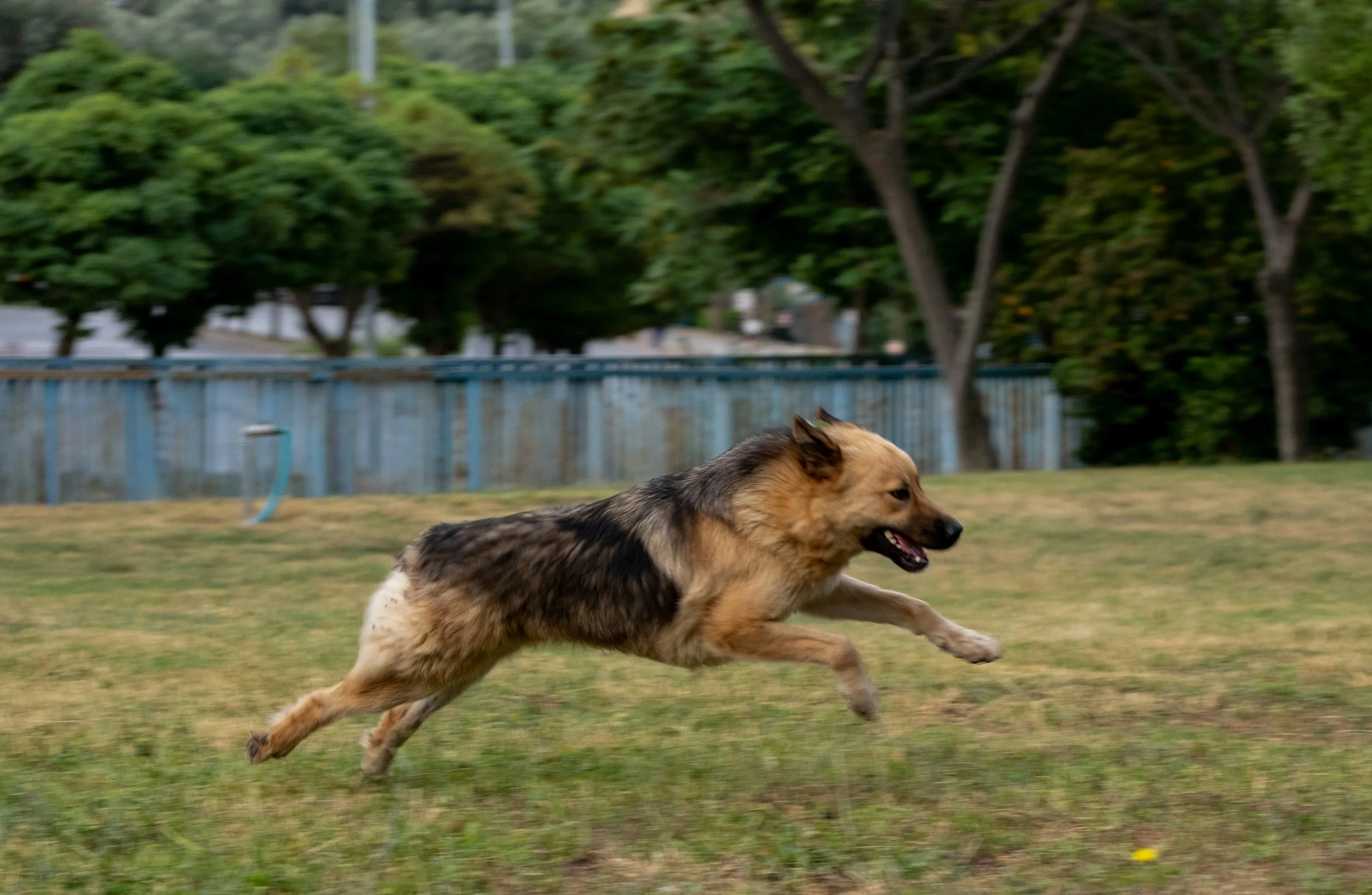
A German Shepherd mix with a docked tail leaps across a grass lawn.
Bolting Through Doorways
Few behaviours create more panic than a dog charging through an open front door.
Whether it's chasing a squirrel, greeting a neighbour, or simply exploring, a dog that bolts can quickly find themselves in danger.
This behaviour is surprisingly common.
Many owners manage it by holding collars, blocking doors, or constantly reminding family members to be careful.
But management alone doesn't teach the dog what to do.
In-home training helps dogs learn self-control around doors and entryways.
Instead of rushing through openings, they learn how to remain calm and wait for direction.
This creates safety, confidence, and peace of mind.

A woman smiles as she is about to open the door to a house and enter. A Golden Retriever is seated inside facing her.
Jumping on Guests
Most dogs aren't trying to be rude.
They're excited.
The problem is that not everyone enjoys being greeted by a dog launching themselves into their personal space.
Jumping can become especially problematic around children, seniors, or guests who are uncomfortable around dogs.
Because this behaviour happens in the home, it makes sense to address it in the home.
We can work through real-life scenarios and teach your dog how to greet people calmly instead of turning every arrival into an event.

A King Charles Cavalier chewing on a large bun covered in seeds.
Counter Surfing
Have you ever left a sandwich unattended for ten seconds only to discover it mysteriously disappeared?
You're not alone.
Counter surfing is incredibly rewarding for dogs.
After all, it works.
Every successful attempt reinforces the behaviour.
The challenge is that most owners only intervene after the dog has already made the decision.
In-home training focuses on teaching alternative behaviours and building impulse control so your dog learns that staying off the counters is more rewarding than helping themselves to your lunch.
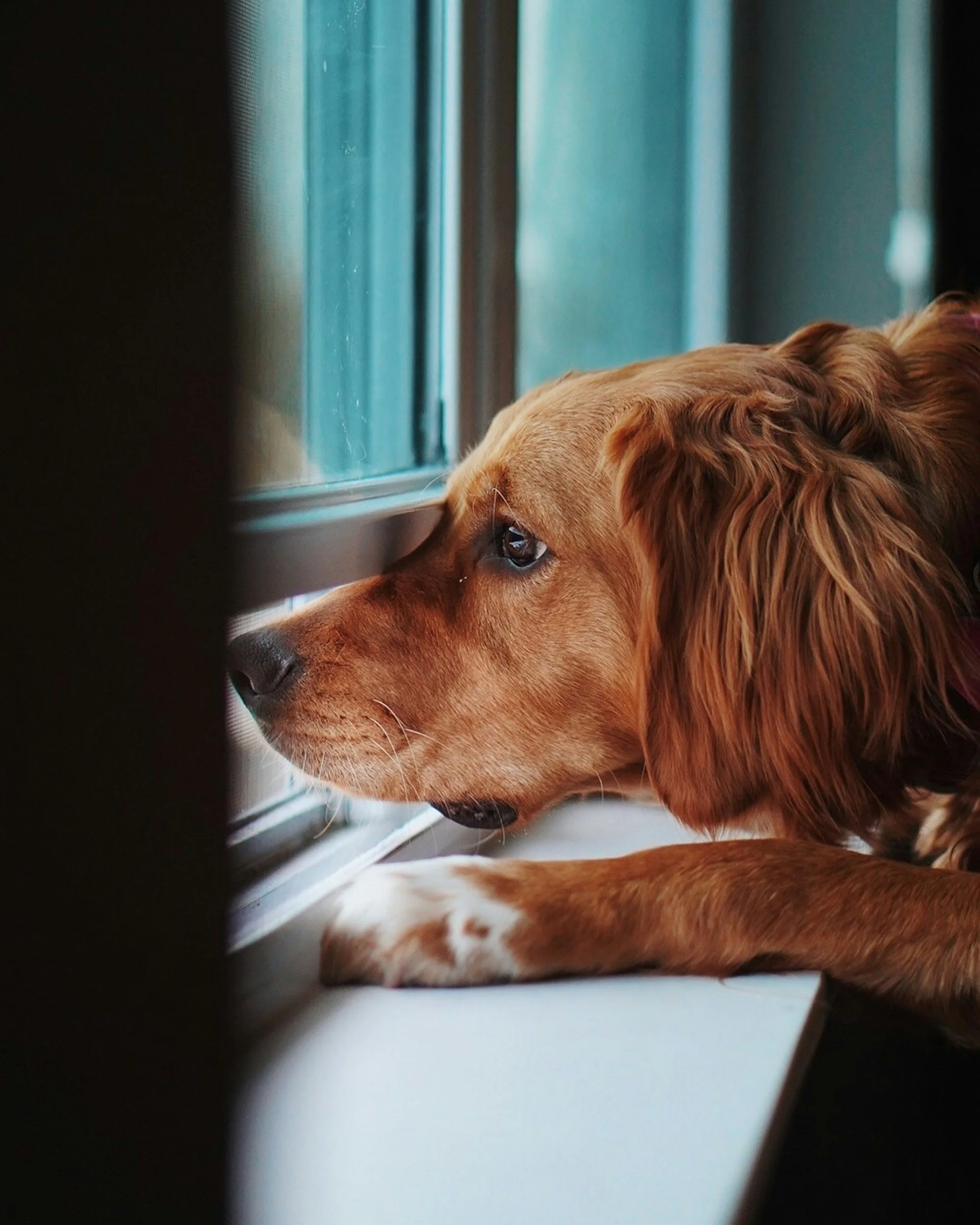
A Golden Retriever mix stares out a window wearing a concerned-look on its face.The dog’s front left foot is white with golden spots on it. Its paws are on the window sill. The window is open slightly and the dog’s nose is near the screen.
Separation Anxiety and Difficulty Settling
Some dogs struggle when left alone.
Others struggle even when you're at home.
They pace.
They follow you everywhere.
They seem unable to relax.
Many owners assume their dog simply has "too much energy."
Often, the issue is actually a lack of structure and clear expectations.
One of the most valuable things we teach dogs is how to settle.
When dogs learn how to relax, it transforms life for both the dog and the owner.
A calm dog isn't just easier to live with.
It's a happier dog.

Nine silhouetted people watching a large display of colourful fireworks.
Fear of Noises
Fireworks.
Thunderstorms.
Garbage trucks.
Construction equipment.
Smoke detectors.
Many dogs live in a constant state of vigilance because the world feels unpredictable.
This can significantly impact their quality of life.
While we can't eliminate every scary sound, we can help dogs develop confidence and coping skills.
Through confidence-building exercises, many dogs learn to navigate their environment with far less stress.

A Parson terrier puppy stands in a garden, surrounded by purple flowers.
Prevention
In-home dog training also sets new puppies and rescue dogs up for success by helping their pet parents learn how to prevent everything from separation anxiety to pulling on the leash.
A lot of owners have grown up with dogs who counter surf, jump on guests, and bark at every noise they hear. These owners want to prevent those issues from ever happening with them and their dog.
Our Happy Puppy Package is all about prevention and it’s not just for puppies. If you’re adopting a new rescue dog and want to start off on the right foot, this package will help you teach your dog how to walk nicely on the leash, how to relax in your home (and in your vehicle), and how to behave when guests come over.

Beyond Dog Training client, Melissa, relaxes in the back of her hatchback vehicle, celebrating finally being able to have her St. Bernard mix, Norm, jump into the vehicle by himself. He is heavy and lifting him was hurting her back. Norm is standing in the back of the vehicle, mostly blocking our view of Melissa.
Why In-Home Dog Training Works So Well
The biggest advantage of in-home dog training is simple.
We work where life happens.
Instead of trying to recreate household problems somewhere else, we address them directly in the environment where your dog experiences them every day.
Your living room.
Your front door.
Your backyard.
Your neighbourhood.
Your vehicle.
This allows us to create practical solutions that help owners build skills that fit naturally into their daily routines.
Training becomes more relevant.
More personalized.
And more effective.
Because ultimately, most owners aren't looking for a dog who behaves perfectly in a training facility.
They want a dog who behaves well at home.
They want to enjoy their walks.
Welcome guests without stress.
Leave food on the counter without worry.
Open the front door with confidence.
And relax at the end of the day with a dog who knows how to settle.
Those are real-life goals.
And those are exactly the kinds of goals that in-home dog training is designed to help you achieve.
If you're struggling with barking, reactivity, leash pulling, jumping, door dashing, counter surfing, separation anxiety, or any other behaviour challenge, know that you're not alone.
More importantly, know that things can improve.
With the right guidance, clear communication, and a training plan tailored to your dog and your home, meaningful change is absolutely possible.
And it all starts right where the behaviour is happening.
Whether you’re in prevention-mode or you’ve been struggling with a behavioural issue for months (or even years), you’ll find hope with a free call.
This call allows you the opportunity to share what’s going on with your dog. What you’ve tried. What’s worked. What hasn’t.
If you’re feeling overwhelmed, this call is the perfect place to start — and it’s free. You have nothing to lose.
Looking forward to helping you with your dog.
Alyssa
About the author: Alyssa Foulkes is Guelph’s in-home dog training specialist who is recommended by veterinarians. She holds an MSc from the University of Guelph where she studied animal behaviour and nutrition.
Photos by Upsplash Images and Alyssa Foulkes