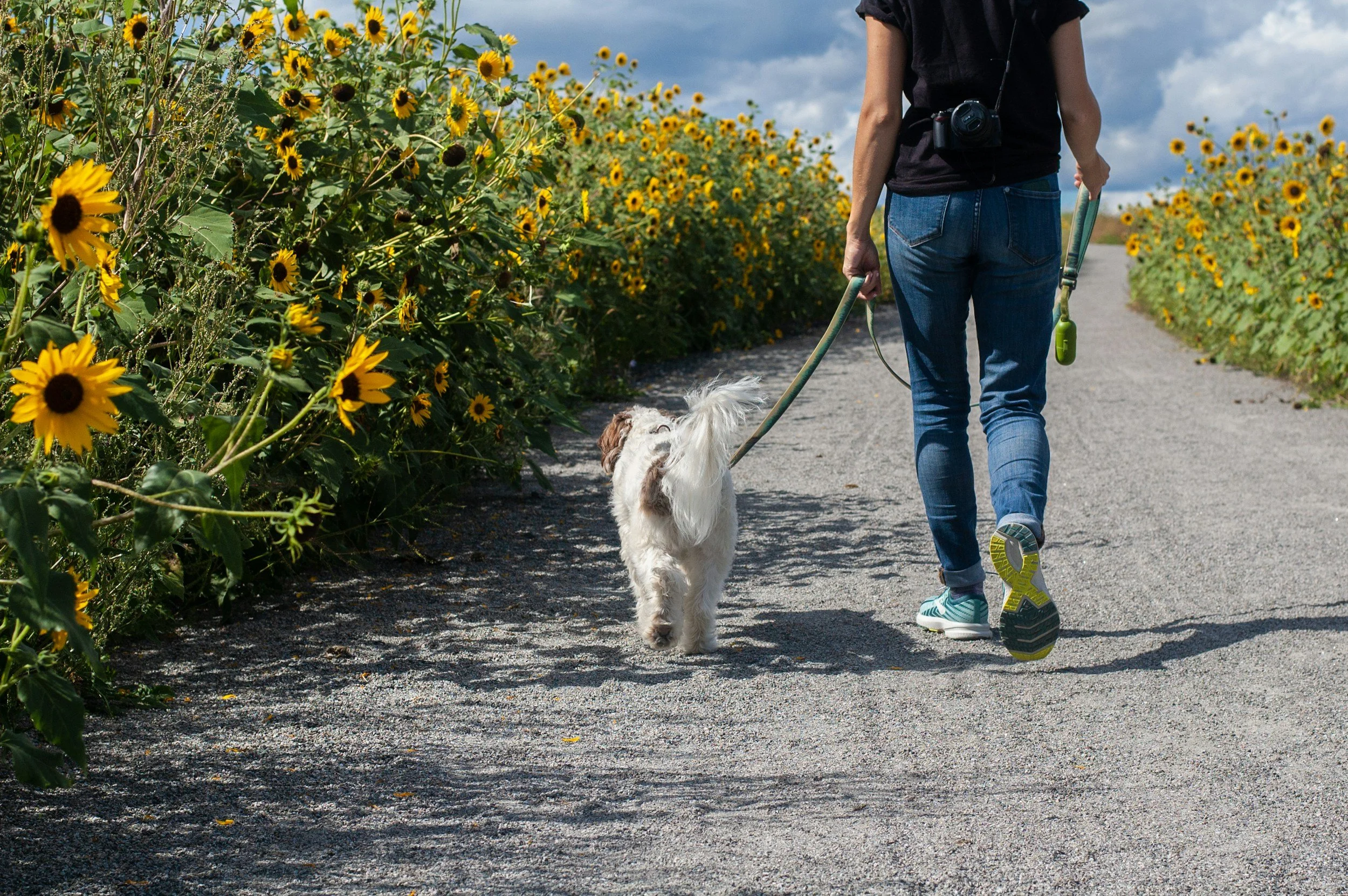
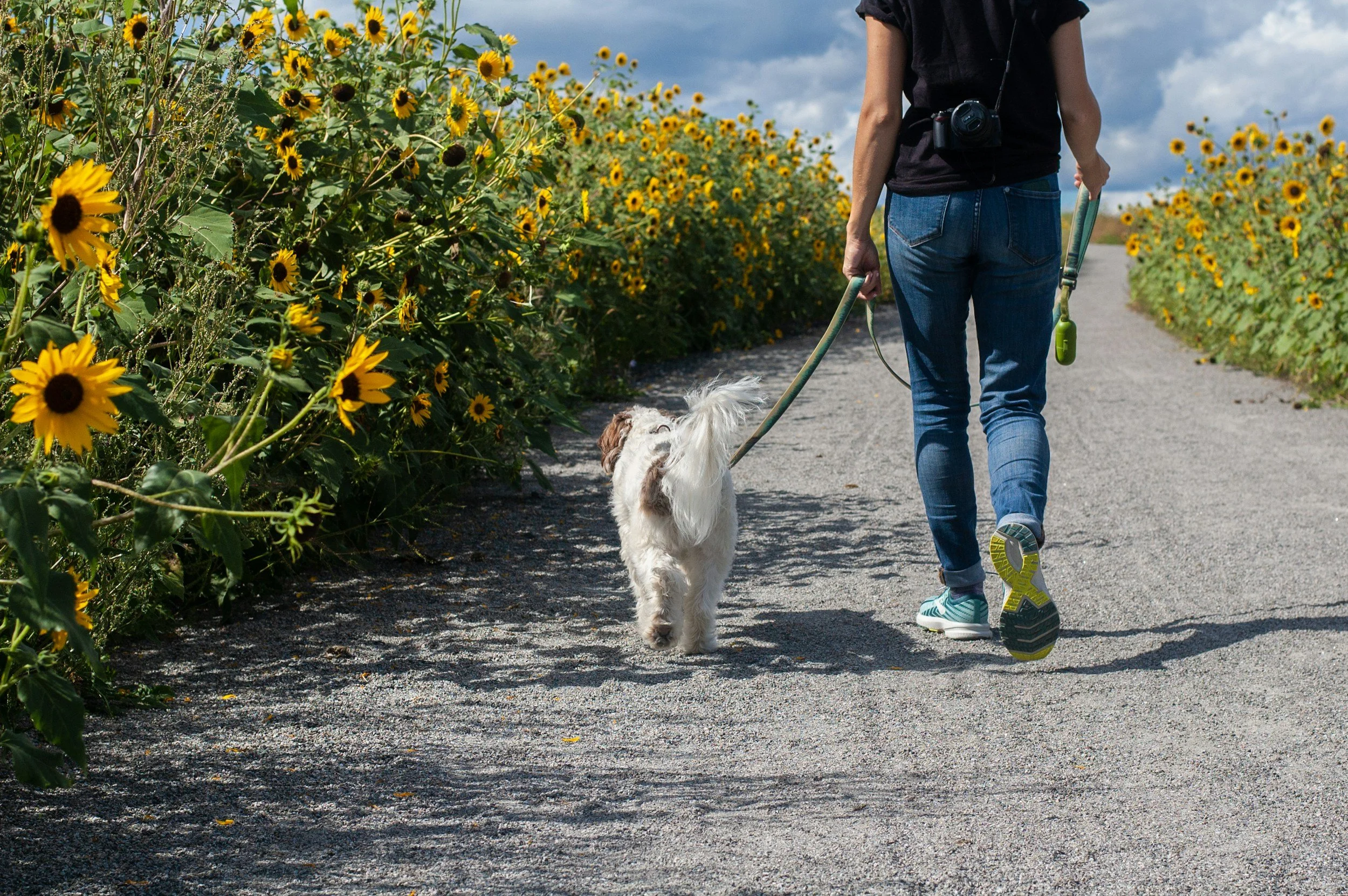
Imagine enjoying walks with your dog Photo: A person walking down a gravel trail lined with sunflowers. Their dog is brown and white and strolling beside them on-leash.
Imagine heading out for a walk with your dog and actually looking forward to it.
You're not constantly scanning the street for other dogs.
You're not worrying about what might happen if a cyclist comes around the corner.
And you're not holding your breath every time someone approaches.
Instead, you're enjoying the fresh air, the sunshine, and spending time with your dog.
Sounds pretty wonderful, doesn't it?
If your dog is reactive on walks, you might be wondering how to get there.
The good news?
You can start building the skills you need for peaceful walks before you ever leave home.
Once you've developed a solid foundation, Guelph has some lovely places where you can gradually practice those skills together.
Let's talk about where to start, where to go, and how to set yourself and your dog up for success.
The Best Place to Start Training Your Reactive Dog? At Home!
When owners call me about their dog's reactivity, they're often surprised to learn that we don't need to start training on a busy sidewalk surrounded by other dogs.
In fact, the best place to begin is inside their home.
Why?
Because learning something new is much easier when there aren't a hundred other things competing for your attention.
Think about it.
Imagine trying to learn a new language while someone is playing loud music, children are running around you, and your phone keeps ringing.
Not exactly ideal, right?
Now imagine learning that same language in a quiet room with someone patiently guiding you through each step.
MUCH easier.
It's the same for your dog.
Inside your home, we can begin teaching the skills that will eventually make your outdoor walks more enjoyable.
We can work on:
Walking calmly beside you on a loose leash.
Following your direction when you change course.
Responding to simple cues.
Learning how to settle and relax.
Building clear communication between you and your dog.
One of my favourite exercises for developing calmness is the place command.
Placework gives your dog an opportunity to practice settling in a designated spot while you build your confidence as a dog leader.
It's also a wonderful opportunity to develop your own calmness and patience.
Because dog training isn't just about teaching your dog new skills.
It's about developing the skills and confidence YOU need to guide your dog through everyday life.
Once your dog is comfortable responding to you inside your home, you can gradually introduce new distractions.
Maybe you start practicing on your back deck.
Then in your driveway.
And eventually, you're ready to explore somewhere new.
One step at a time.
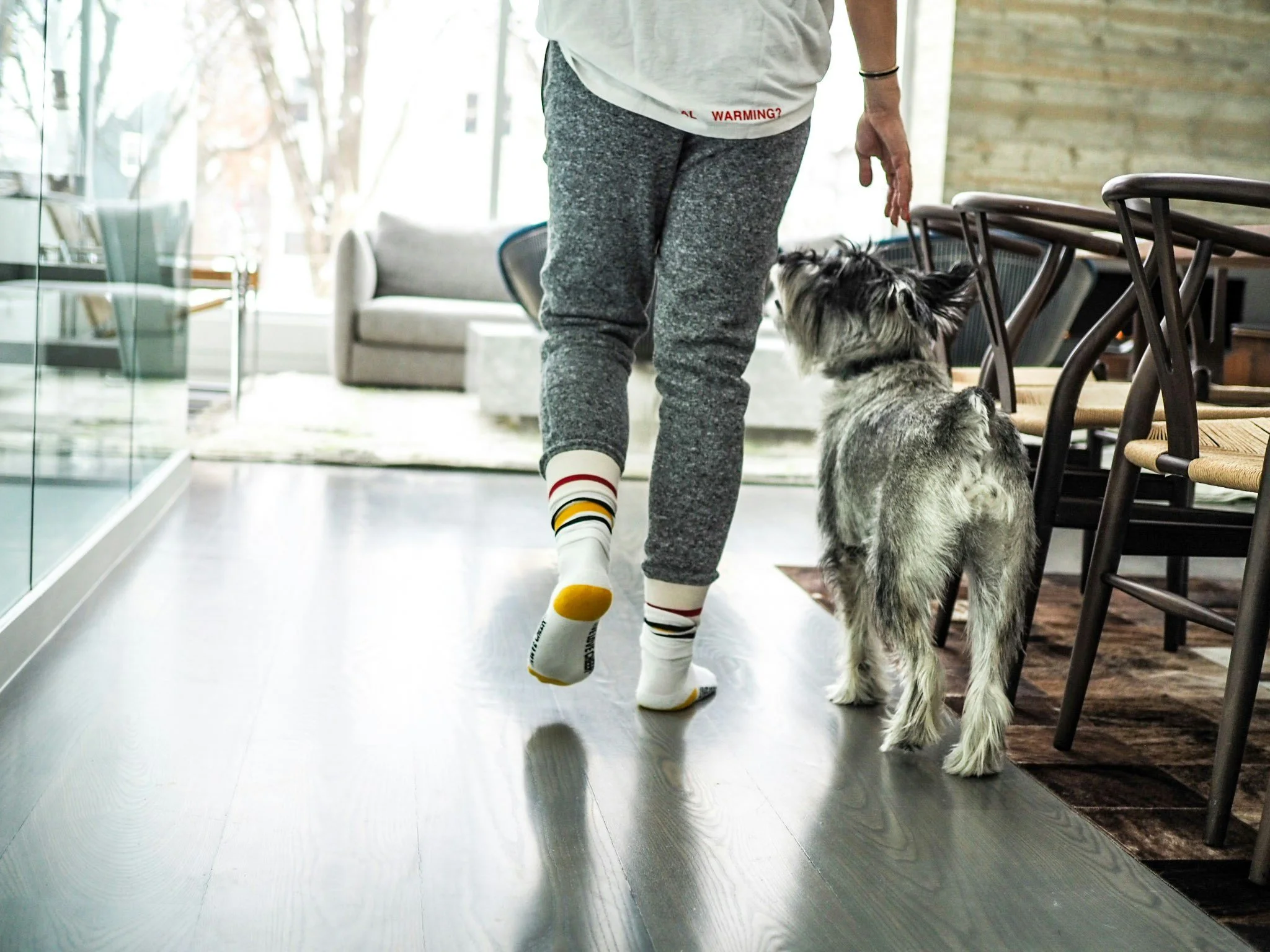
Building a solid foundation at home is the first step to overcoming reactivity on walks (Photo: a person wearing jogging pants and socks walks beside a dining room table. Her dog is grey, black, and white and is walking beside her off-leash.)
Your First Outdoor Training Sessions Should Focus on Setting Your dog up for Success
Here's something I want every owner of a reactive dog to understand:
You don't need to find the busiest trail in Guelph to make progress.
In fact, I'd encourage you to do the opposite.
Choose somewhere quiet.
Somewhere you can see what's happening around you.
Somewhere you have plenty of space to move away from distractions when needed.
Your first outdoor sessions might only last ten minutes.
And that's perfectly fine!
You're not trying to walk five kilometres.
You're helping your dog learn that the skills she developed inside your home also apply outdoors.
When she can walk calmly beside you in a quiet environment, you're ready to gradually increase the difficulty.
So, where can you practice in Guelph?
1. Quiet Parking Lots - Trust me
One of the easiest places to practice leash skills with your dog is in empty parking lots.
Asphalt holds way less yummy smells than grass does, so you’ll be working with a companion who will have a way easier time listening to you.
How do you find an empty parking lot? Church parking lots are pretty quiet during the week and school parking lots are pretty empty on weekends.
Always check to make sure that the pavement isn’t too hot before beginning a training session in this type of environment.
Guelph has many lovely residential neighbourhoods that have schools and churches, so you’re spoiled for choice.
There are a few school properties that have sports fields where dogs are allowed to be off-leash. If your dog is reactive, you’ll want to avoid the parking lots of these schools during busy off-leash times. The last thing you and your reactive dog need is off-leash dogs with no recall bombing up to you.
Check out this link for a complete list of sports fields where dogs are allowed to be off-leash:
https://guelph.ca/living/recreation/parks/leash-free-zones-for-dogs/#unoccupied-sports-fields
What can you work on with your dog in the nice, quiet parking lot you found?
You can practice:
-heeling (having your dog walk beside or slightly behind you on a nice, loose leash
-inside turns (turning toward your dog and walking back in the opposite direction together)
-outside turns (turning away from your dog and walking back in the opposite direction together)
-pace changes (teach your dog a command for “jog” and for “slow” — that last one is amazing for wintertime when you need to walk over patches of ice.)
-recall (I like to practice drawback recalls as I’m walking — where I fade back and my dog figures out I’m missing and turns around to come back to me. This is more realistic than making her sit and stay before I call her to come (though bet your bottom dollar I practice it that way too. You can never practice recall enough.)
-tug (you’re out here to have fun, remember? Tug is fun and also teaches your dog to have lovely manners during play.)
If you drove to the parking lot to practice, you’ll also get the opportunity to practice:
-calm car exits (having your dog exit the vehicle while still engaged with you vs. exiting the vehicle and yanking you toward something they think is interesting.) Even though it’s an empty parking lot, your dog will still manage to be distracted by something, so take your time and practice this until you’re happy with the way they came out of the vehicle. This will help you when you’re at on On Route in the middle of summer. Teaching it in this nice quiet environment and then practicing it when you’re at trailheads is how you build up to a dog who can listen to you at a busy On Route.
-place command (AKA placework) - practicing having them relax on place in this quiet setting is how they learn to be able to settle on their cot when in busier settings (beside a sports field, at a restaurant, at your cottage, etc.)
The edge of the parking lot will have grassy areas where you can practice breaking your dog to go have free time on a nice loose leash vs letting them pull you toward the grass.
Choose a time of day when there are fewer people and dogs outside.
And remember, you don't need to go far.
You might spend five minutes walking back and forth along the same quiet stretch of parking lot adding in a few recall repetitions to mix things up.
If you have an active dog, you may begin with tug and then move into your leash skills and recall after you’ve taken their energy down a notch.
Once your foundations are looking good in this type of quiet outdoor environment, you’ll realize that your confidence has grown (and so has your dog’s.)
Before you rush off to practice on a busy neighbourhood street, add in some challenges to this environment and boost your confidence even more.
-set a piece of kibble down on the ground and practice heeling by this distraction (this will help your dog be able to listen to your guidance and keep walking when there’s garbage on the ground, bunny poop, etc.)
-you can try this same activity using a toy that your dog likes (I like to begin with a toy they are lukewarm about and then work up to their favourite toy. This sets them up for successful repetitions rather than failure.)
When your dog is able to listen to you around these little distractions, you can search for quiet parking lots where there’s a little more foot traffic off in the distance.
There's no need to rush to work around your dog’s biggest triggers. Foundations come first.
The goal is to make each walk an opportunity for success, so you can start having more walks that are positive experiences for both of you.
We’re not avoiding triggers. We’re building a solid foundation before adding the triggers back in. There’s a big difference.
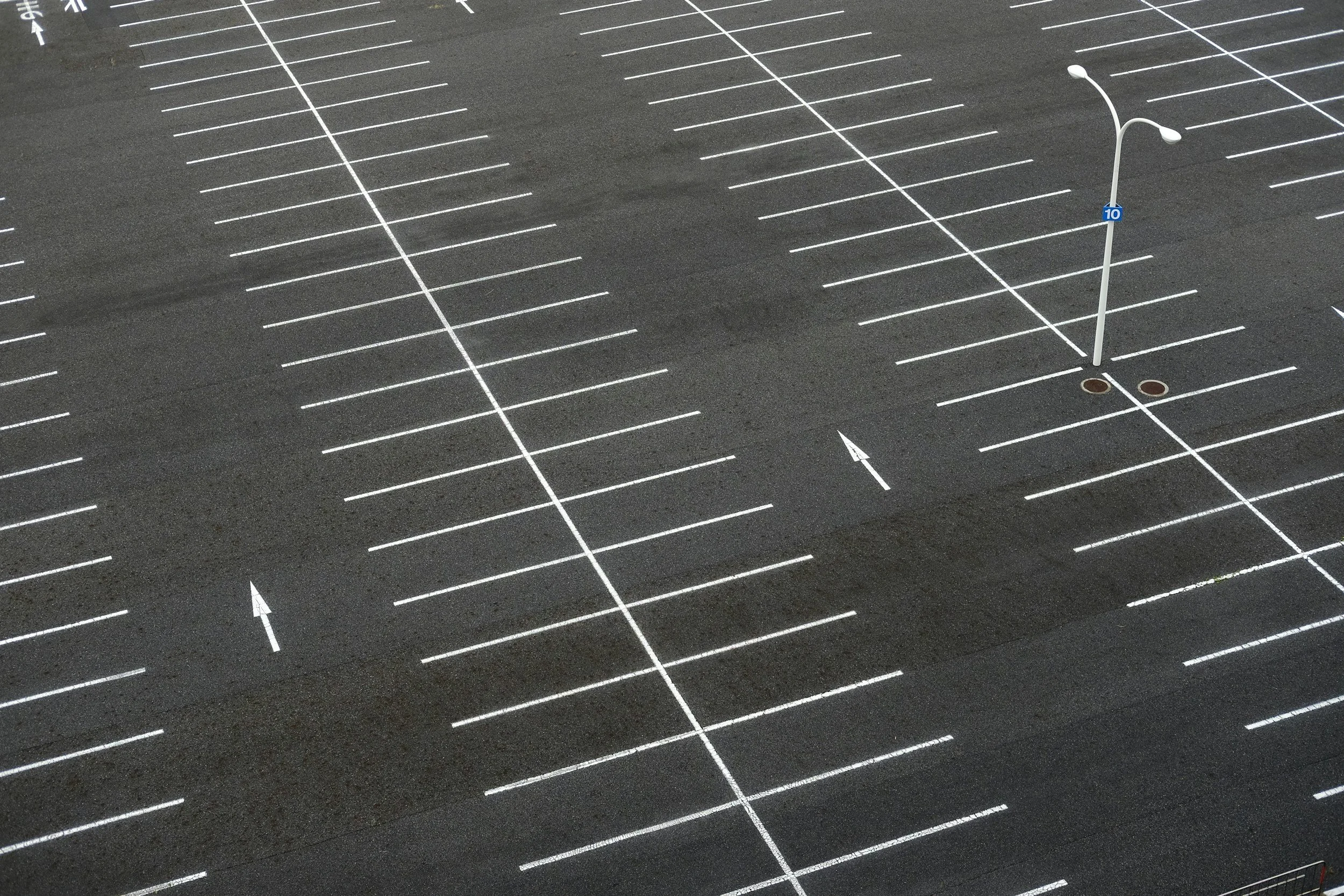
On a cool day, an empty parking lot is a great place to proof your commands (Photo: an aerial shot of a parking lot. There are four rows of parking spots visible. It is marked with white lines and arrows. There is one light standard in the photo as well.)
2. Eastview Community Park
Once you and your dog are feeling confident in quiet parking lots, you might be ready for a new environment.
Eastview Community Park in Guelph's east end is one option to consider.
With open green spaces, walking paths, and naturalized areas, the park can provide opportunities to practice your training skills while enjoying a change of scenery.
One of the advantages of an open environment is that you can see people, dogs, and other distractions from a distance.
And when you're training a reactive dog, having that extra space is extremely helpful at first.
Imagine you're practicing loose-leash walking and another dog appears across the park.
Instead of waiting until that dog is walking straight toward you, you have an opportunity to notice what's happening, create more distance, and help your dog continue practicing calm behaviour.
You might walk along a quiet edge of the park rather than heading straight into a busy area.
The first time you arrive to a new location, you may notice that your dog is completely ignoring you when you’re about to let them out of the vehicle. They’re looking past you. Sniffing the air. Maybe even whining. This isn’t the time to panic or give up. Take a breath. And then another. And wait. Calm eye contact is the key to getting released from your vehicle. If they are ignoring you here, they will ignore you once they’re out of the vehicle. This isn’t a good way to begin a session, since a dog who is ignoring you will be calling the shots as soon as it sees a trigger across the parking lot.
Remember that this little outing gives you information — not a report card as to how you’re doing as an owner (you’re doing great, by the way, since you’ve read this far!) If they can’t pay attention to you here in this parking lot, it lets you know that you need to practice calm car exits more often.
Remember, a successful training session doesn't need to be long and they should always be fluid. What that means is that you may have an idea of what you would like to accomplish in a particular session (eg. I want to practice heeling in the parking lot at Eastview park), but your dog is super energetic that day because your morning walk was cut short because you woke up late and had to go to work. You’ll want to work with the dog who is in front of you in this moment (a dog with energy to burn) and play some tug or fetch first, before working on some loose leash walking.
Eastview Community Park also has recreational facilities and sports fields, so activity levels can vary considerably.
Choose quieter times, check your surroundings, and avoid areas where off-leash dogs may be present.
As your dog becomes more comfortable, you can gradually explore different parts of the park together.

There are great learning opportunities at Eastview Park in Guelph. When your dog is ready for a challenge, you’ll be able to work around distractions like beach volleyball, rugby, and the playground. Photo: beach volleyball players in action on a beach volleyball court. The players are silhouetted by a sunset.
3. The University of Guelph Arboretum
The University of Guelph Arboretum is another beautiful location to consider when your dog is ready for a little more adventure.
With walking paths, gardens, and natural areas, the Arboretum offers opportunities to enjoy a peaceful outing while practicing the skills you've developed together.
Start with a quieter, more open area where you can see what's happening around you.
Practice walking calmly. Remember to relax your shoulders and breathe. That’s a step that will help nourish your stressed-out, reactive dog owner soul.
Give your dog opportunities to sniff and explore on a nice, loose leash. Remember to release them for these breaks so they know who is leading the walk (you) and who can relax and just be a calm follower (them.) The more your dog trusts that you’re leading, the more they can relax and retire from the job of over alert protector.
Imagine you showed up to your first day on the job and no one gave you a tour or explained what you should do. Awk-ward! You’d be constantly searching for someone to tell you what to do. Dogs are the same. They are pack animals and genetically hardwired to have a leader to tell them when to eat, when to drink, when to rest, when to play, and when to knock it off because they’re playing too rough. If no one takes that role, they have to fill it. And your nervous, anxious dog doesn’t feel well when she’s on constant alert. She wasn’t born for this. She needs a leader. And you can do it!
While your dog is having a break, notice how she responds to the different sights, sounds, and smells.
If her reactivity is based in fear, she may be the type of dog who is nervous when long grasses blow against her, so be mindful of this and be ready to help her back to calmness if she goes into flight.
As your confidence grows, you can gradually introduce more challenging elements, like calmly passing by other dogs at a distance. Don’t be afraid to be on the grass working parallel to people on the trails. Your dog needs space right now. The more you practice getting these repetitions in where she doesn’t load and explode the better.
Remember that the Arboretum is also a space for conservation, education, and research. Keep your dog leashed, follow posted rules, and stay on permitted paths.
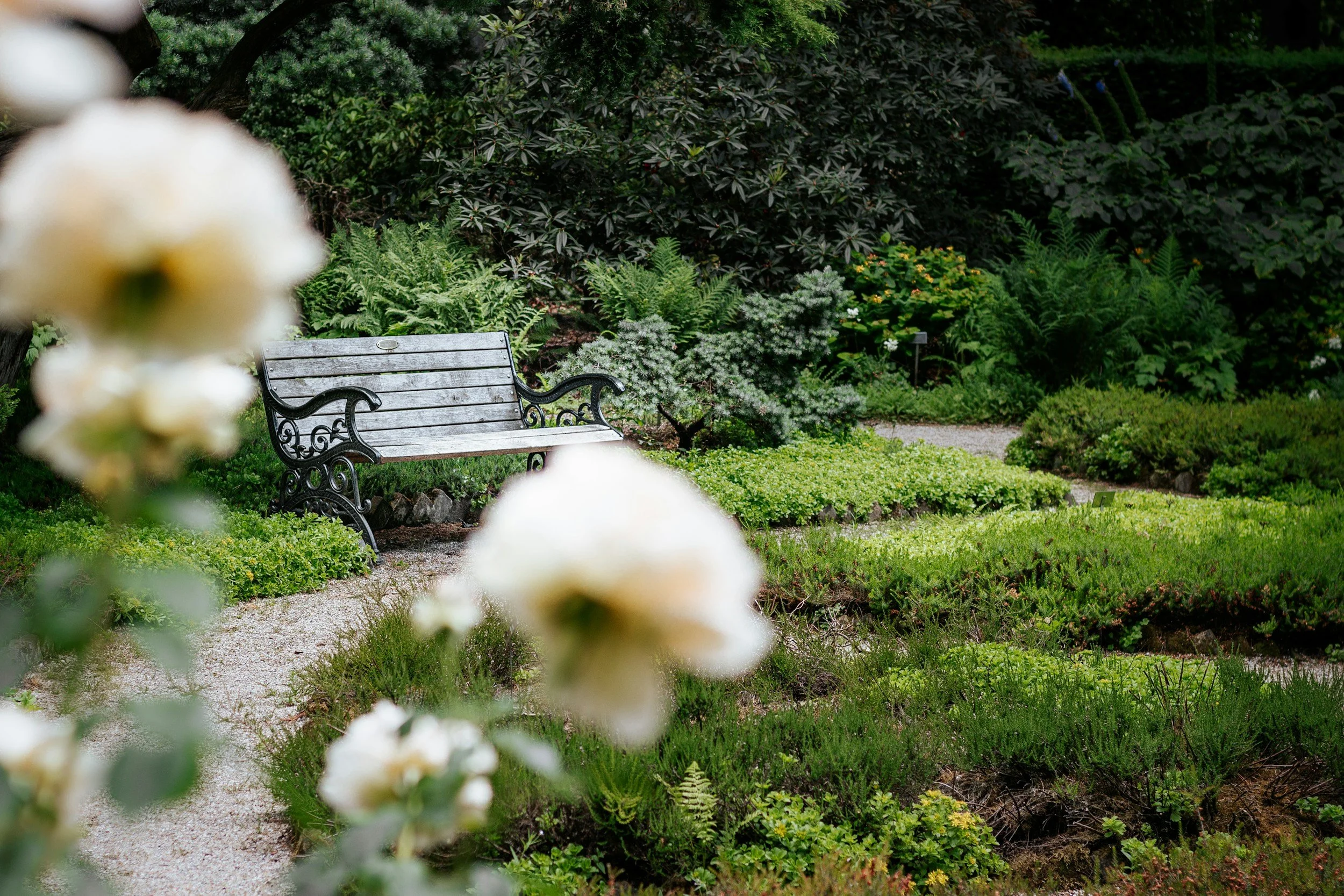
Training in a peaceful environment will help you and your dog feel more peaceful. Photo: White roses in the foreground with a garden and a wooden bench in the background.
How Do You Know When Your Dog Is Ready for More Distractions?
This is a question I love because it means you're thinking about your dog's progress rather than simply trying to get through another walk.
Here are a few things to look for.
Can your dog walk beside you without constantly pulling?
Can she respond when you ask her to change direction?
Can she notice a distraction without becoming completely overwhelmed?
Can she relax and enjoy her surroundings?
Is she recovering more quickly when she does have a blow up?
And just as importantly...
Are YOU feeling more confident?
You don't need perfection.
But you do want to see consistent progress before making things more difficult.
If your dog is barking, lunging, freezing, fleeing, or struggling to recover after seeing another dog, the environment may be too challenging right now.
Give her more space.
Return to an easier environment.
And continue building on the skills you've already developed.
Remember, making training easier isn't taking a step backwards.
It's giving your dog another opportunity to succeed.
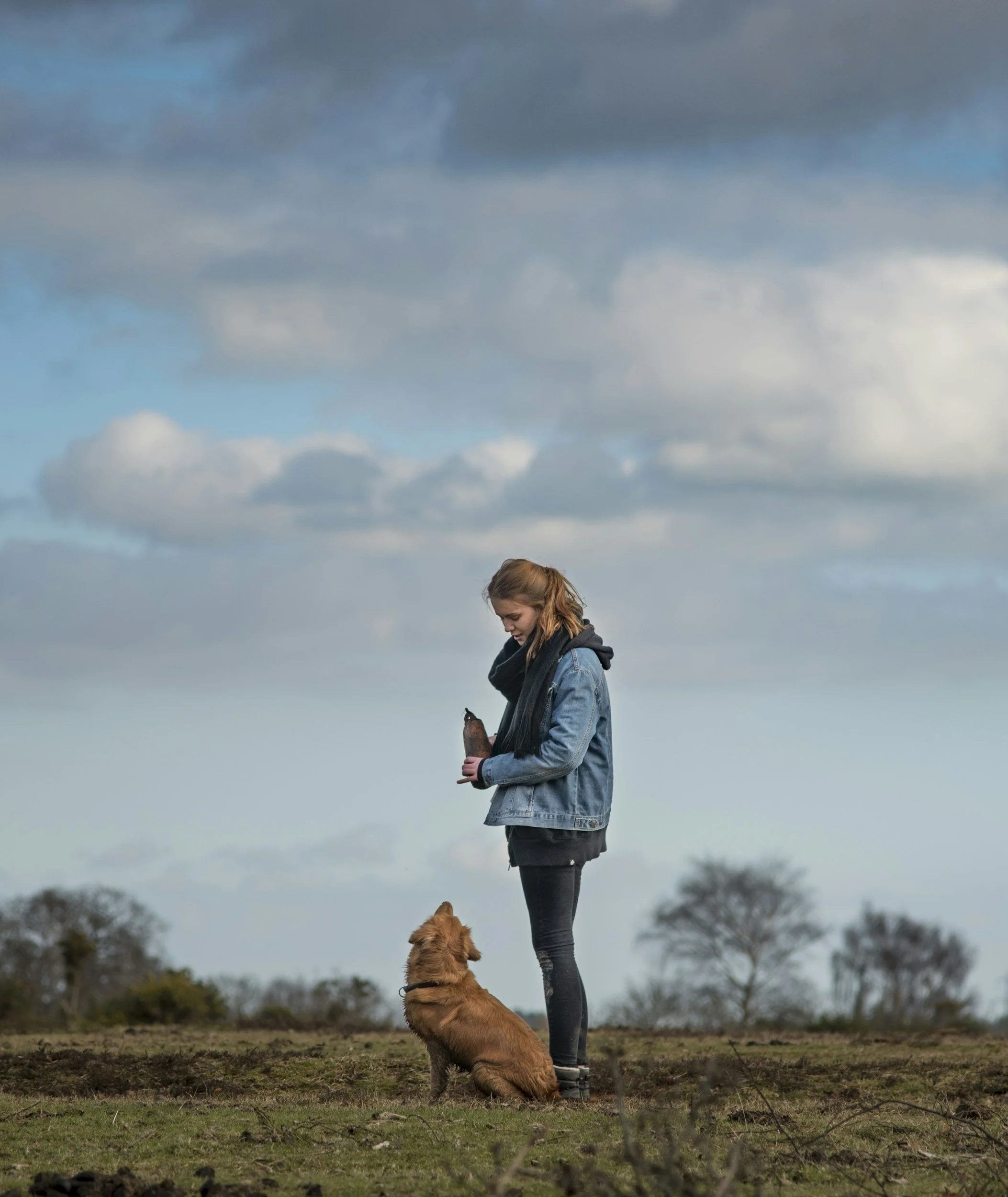
Take your time building your foundations and before you know it you’ll be working in more and more distracting environments with your dog. (Photo: A woman looking down at her Duck Toller. It is seated and looking up at her. They are standing in a field.)
What Should You Do If Another Dog Appears?
Picture this.
You're walking through a quiet park.
Your dog is doing beautifully.
She's walking calmly beside you, enjoying the smells, and responding when you speak to her.
Then you notice another dog approaching.
What now?
First, remember that you have options.
You can create more distance.
You can change direction.
You can move into a more open area.
You can help your dog focus on a familiar skill she's already practiced successfully.
If she's comfortable enough, reward her for noticing the other dog and remaining calm.
If she's beginning to load (tense body, fixated stare, mouth closes, etc.) move farther away.
One of the wonderful things about developing good communication with your dog is that you begin to feel prepared for situations like this.
Instead of wondering what to do, you have a plan.
And that makes walks so much more enjoyable.
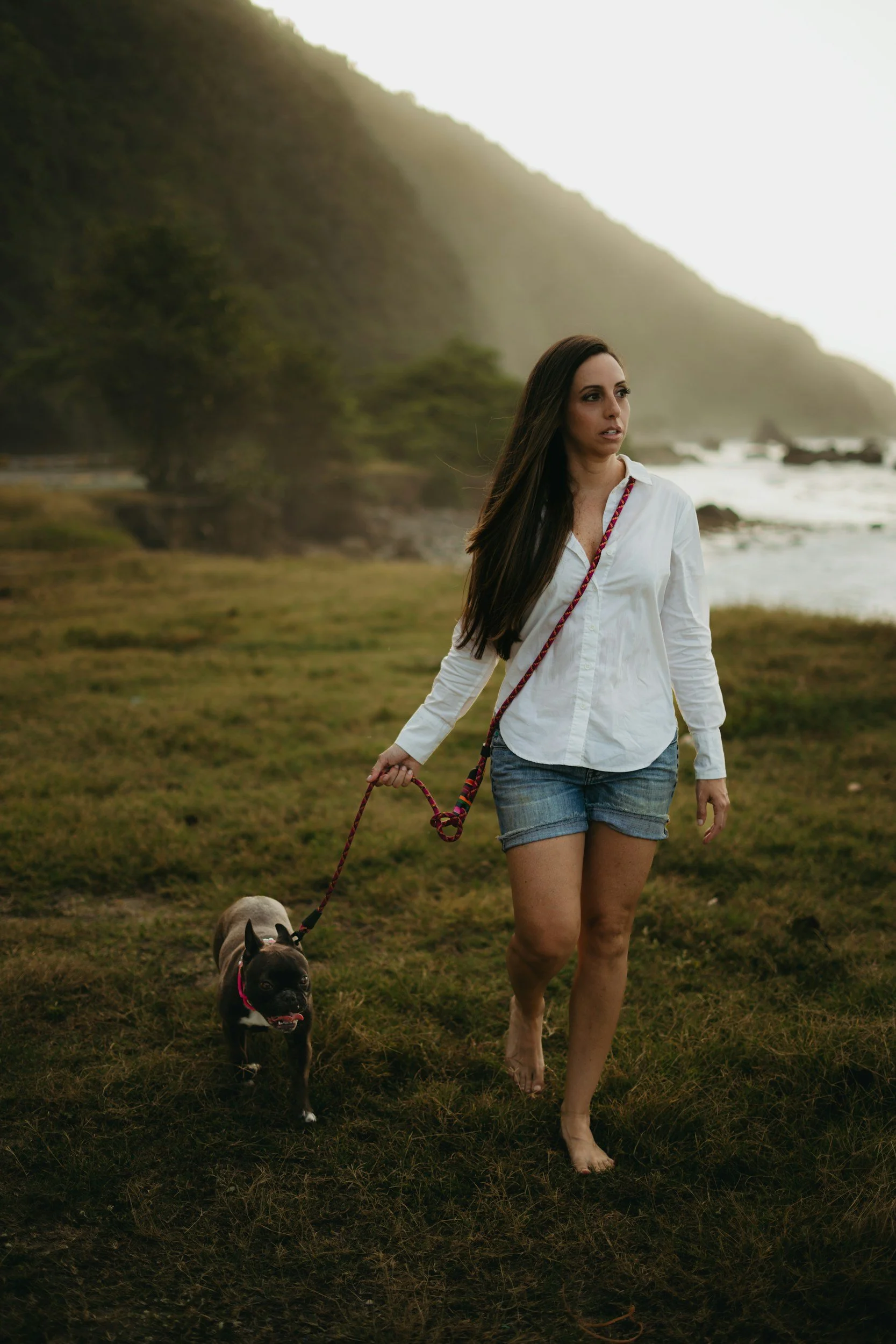
Your reactive dog needs movement, space, and guidance from a calm leader. You can do this! (Photo: A barefoot woman walks with a small, brown and white bully mix on a nice loose leash.)
Remember: Your Dog Doesn't Need to Meet Every Dog
This is something I remind owners of regularly.
Your dog doesn't need to become best friends with every dog in Guelph.
She doesn't need to greet every person.
And she doesn't need to investigate every interesting thing she encounters.
One of the most valuable skills you can teach your dog is simply how to enjoy being in the world without needing to interact with everything around her. This is called neutrality. Humans practice this all the time. Do you walk up to everyone in the grocery store and introduce yourself? No. You’re neutral.
Imagine walking past another dog and continuing on your way.
No drama.
No pulling.
No barking.
Just a lovely walk.
That's a wonderful goal to work toward.
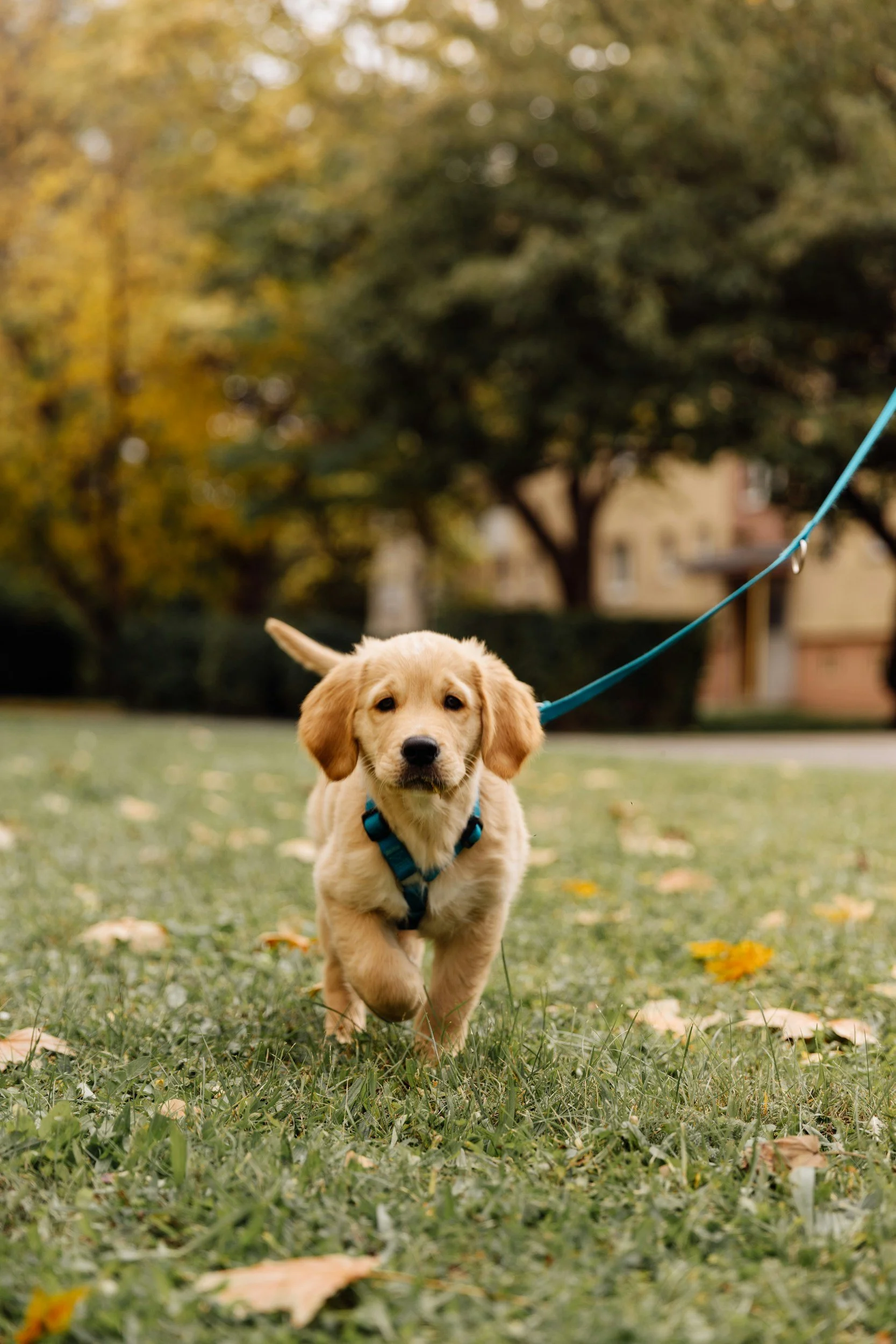
Remember: what you allow, you agree with. If you allow your puppy to pull you toward other dogs during your walks when she’s little, she’ll keep doing that when she’s full-grown. (Photo: a tired-eyed Golden Retriever puppy walks toward the camera on-leash.)
The Best Walk Is the One Where You Both Feel Successful
I want you to imagine something.
It's a beautiful Saturday morning in Guelph.
You clip on your dog's leash and head outside.
You feel relaxed.
Your dog is happy.
You spend some time exploring a quiet park, enjoying the sunshine and the fresh air.
A jogger passes.
Your dog notices, then continues walking.
Another dog appears in the distance.
You calmly guide your dog along your chosen route.
And instead of feeling anxious about what might happen next, you're enjoying your time together.
That's the kind of life I want for you and your dog.
And it begins with the foundation you build at home.
Not with the busiest trail.
Not with the hardest possible training situation.
But with clear communication, consistency, patience, and lots of opportunities for success.
Your dog can learn new skills. You can become a confident dog leader. And your walks can become something you both look forward to.
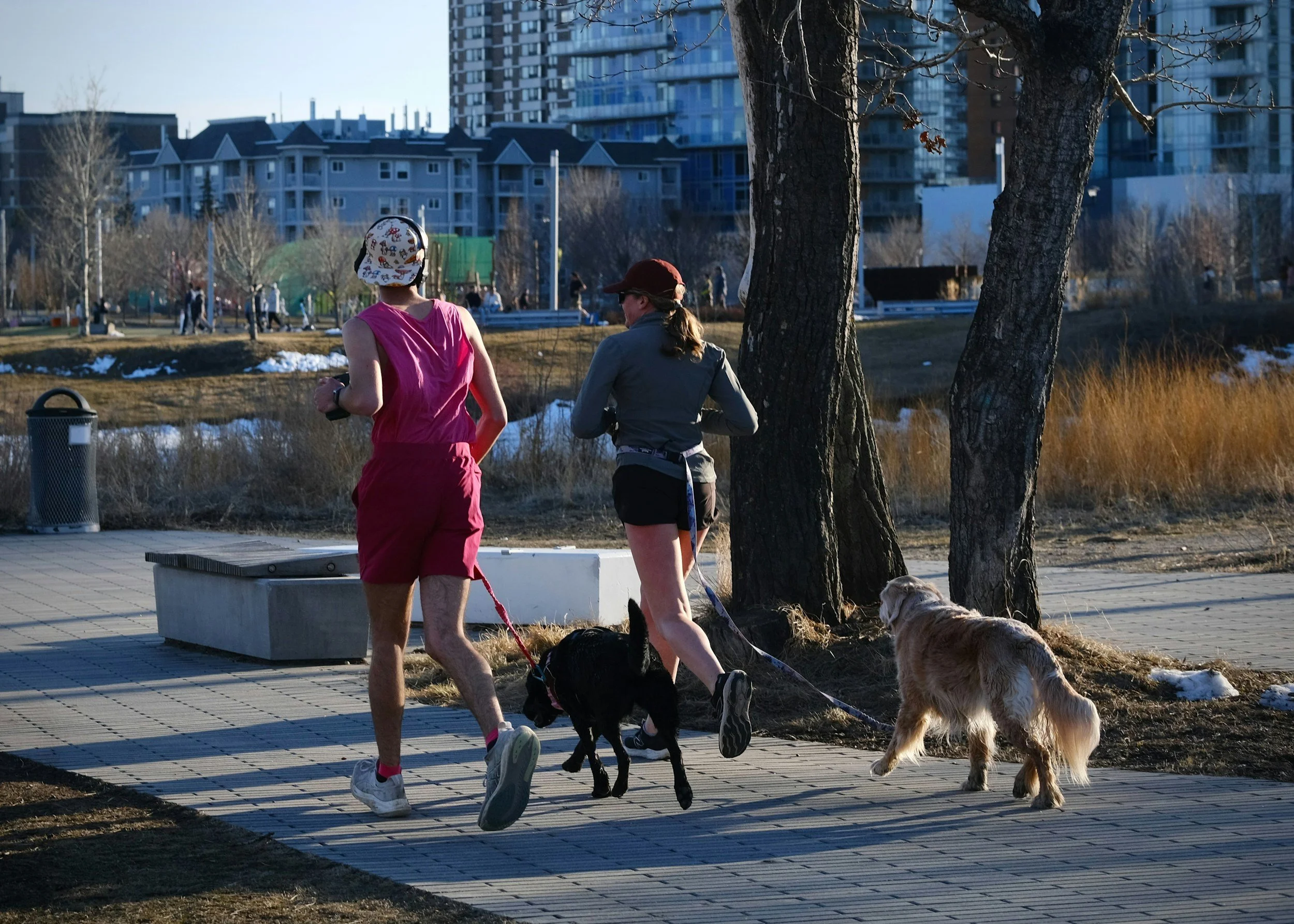
Before you know it, you and your dog will be calmly passing joggers, other dogs, and even squirrels. (Photo: Two joggers running with their on-leash dogs. They on a paved trail with trees, grass, and melting snow beside them. They are heading toward a busy park.)
Ready to Enjoy Peaceful Walks With Your Dog?
If you're struggling with leash reactivity, barking, lunging, or pulling on walks, we'd love to help.
At Beyond Dog Training, we specialize in in-home dog training in Guelph and the surrounding area.
We begin by helping you develop a solid foundation in your own home, where you and your dog can learn without the added pressure of outdoor distractions.
Then we gradually build those skills into everyday life.
Our goal isn't simply to help your dog behave during a training session.
It's to help you enjoy living with your dog.
Imagine peaceful walks, a calmer home, and the confidence to take your dog on adventures.
Book your free call with Beyond Dog Training and let's start building the calm, confident life you and your dog deserve.
Want to explore more Guelph trails with your dog? Check out this blog post: https://beyonddogtraining.ca/news/dog-friendly-trails-in-guelph-for-training-practice
I look forward to helping you and your dog on the path to calmness.
Alyssa
About the author: Alyssa Foulkes is Guelph’s in-home dog training specialist who is recommended by veterinarians. She holds an MSc from the University of Guelph where she studied animal behaviour and nutrition.
Photos by: Upsplash Images