

Ready to help your dog move past her fear of fireworks, thunderstorms, and garbage trucks? Read on for hope. Photo: fireworks in the sky
If you have a dog who struggles with fear, you know how heavy it can feel.
Fireworks season rolls around and your stomach drops before the first one even goes off. You’re already planning your evening around how your dog might react. You’re worried about the pacing, the panting, the shaking. You feel terrible watching her suffer.
And if we’re being honest, it’s not just fireworks.
It’s thunderstorms.
Garbage trucks rumbling down the street.
The sharp beep of a smoke detector.
Even everyday sounds that most dogs barely notice, like when the wind blows in the long grass, puts your dog on edge.

Even if it feels like your dog is afraid of everything — you can help her move through it. Photo: lightning forking across a night sky
When your dog lives in that constant state of hyper alertness, it doesn’t just disrupt your home and walks, it decreases their quality of life.
They’re not relaxing.
They’re not settling.
They’re not feeling safe.
And that’s where a deeper fear starts to creep in for you.
“What if this never gets better?”
That question sits quietly in the background. And over time, it can turn into frustration, guilt, and even a sense of being judged as a bad owner — especially when your dog reacts in ways that other people don’t understand.
You might feel embarrassed when guests come over.
Worried about what your neighbours think.
Unsure if you’re actually helping or accidentally making things worse.
One thing’s for sure, you can’t keep living like this. You’re stressed out and losing sleep. You’re also noticing that you’re in an anxiety loop with your dog. Now both of you are stressed in anticipation of the storms, fireworks, walks, etc. and you’re feeding off each other.

You can’t keep living with these levels of stress. Neither can your dog. Photo: a stressed person sitting in front of their laptop holding their head in their hand
Let me reassure you of something important:
Your dog can overcome her fear.
And more importantly, your dog can learn how to feel safe again.
But it doesn’t happen by chance and it doesn’t happen by just waiting it out.
It happens through clarity, structure, and guidance that your dog can actually understand.
We see this often with dogs who are sensitive to noise and environmental triggers.
They whine.
They pace.
They hide.
They’re afraid and they need your help.
And that’s where in-home dog training becomes so powerful. You learn how to help them through it.
Instead of trying to eliminate every trigger — which is impossible — we focus on teaching your dog what to do when those triggers happen.
We give them a role. A job. A clear path forward.
One of the most impactful tools we use is placework.
Place isn’t just about getting your dog to lie on their bed. It’s about creating a predictable, safe space where your dog can settle — even when the environment feels uncertain.
When fireworks go off, your dog doesn’t have to pace the house or escalate into panic.
They have somewhere to go.
Something to do.
A way to regulate.
And over time, that changes everything.
Because what your dog practices, they get really good at.
If they practice panic, they get better at panic.
If they practice calm, they get better at calm.
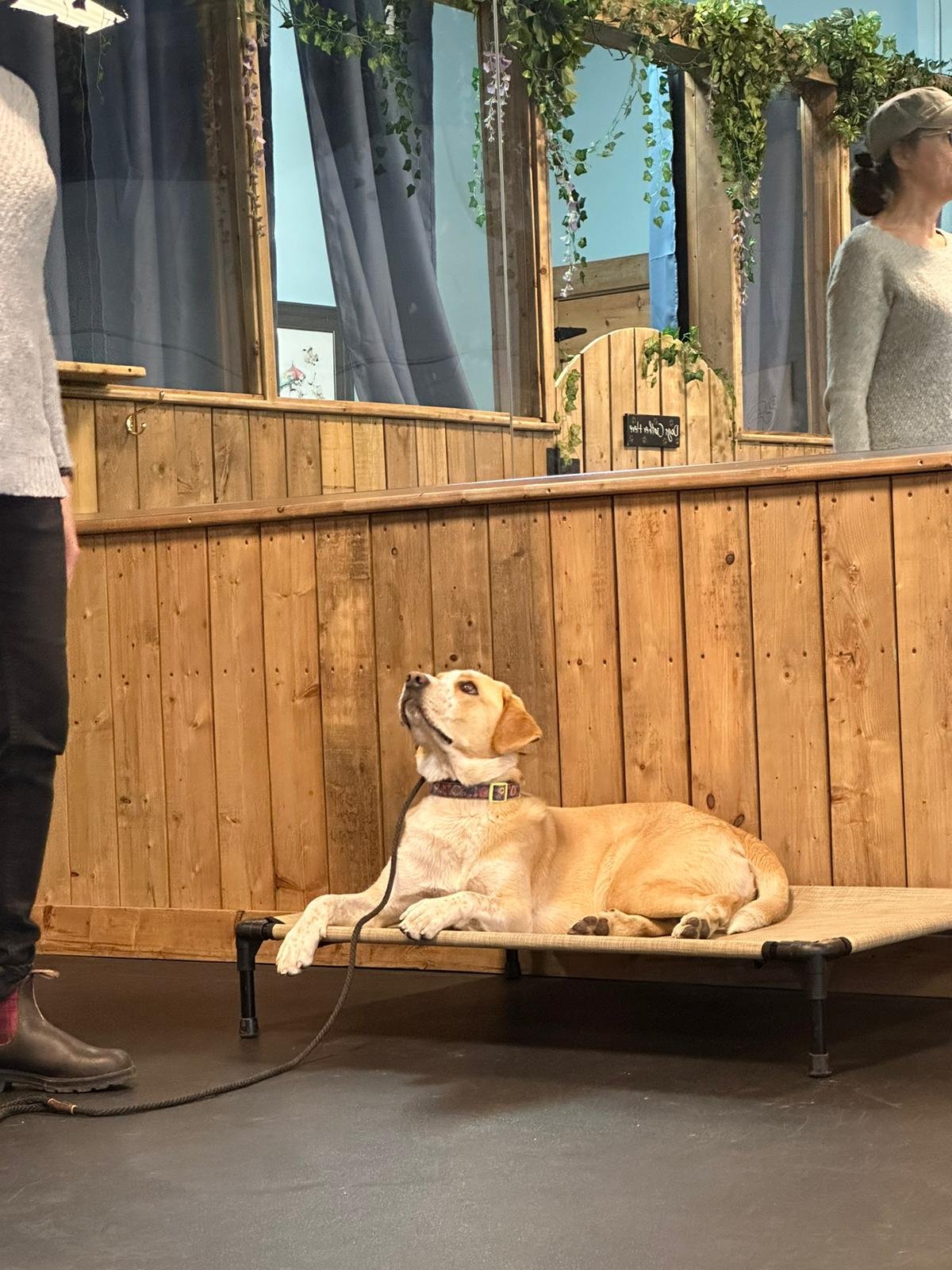
Oakleigh was terrified of the smoke detector and this rippled to the sounds her gas oven made. She would race from the kitchen and hide upstairs. Placework changed that, helping her move past fear and into calmness. Photo: Oakleigh, a beautiful, golden-coated dog lies on her place bed calmly looking up at her owner.
This is how we start to shift their experience from one of constant fear to one of growing confidence.
Now, I want to be clear — this isn’t about “fixing” your dog overnight.
Fear-based behaviours require thoughtful, consistent work.
But what might surprise you is how quickly you can start to see progress when the right structure is in place.
We’ve worked with many dogs who began in a state of constant reactivity — startled by every noise, unable to settle, always on edge.
Through in-home training, we help owners build routines that create predictability. We guide dogs through clear expectations so they’re no longer guessing how to respond. And we support you through the process so you’re never left feeling stuck or unsure.
Because that’s the other piece of this that matters.
You shouldn’t have to figure this out alone.
When you’re worried your dog won’t improve, it’s often because you haven’t been shown a path that actually works.
And when you finally have that path, something shifts.
You start to feel hopeful again.
You feel less reactive yourself.
You begin to trust the process.
And your dog feels that change too.
They begin to settle more quickly.
Recover faster from triggers.
And experience more moments of calm in their day.
That’s not just good for your home.
It’s life-changing for your dog.
Because a dog who isn’t living in constant fear is a dog who can finally enjoy their life.
They can rest.
They can exist without being on edge.
They can feel safe.
And that’s what we want for every dog we work with.
If your dog struggles during fireworks, thunderstorms, or everyday noises, and you’re worried that things will never improve, know this:
There is a way forward.
With the right guidance, your dog can learn how to handle the world around them and you can feel confident supporting them every step of the way.
If you’re ready to help your dog move from fear to calm, and from chaos to clarity, we’re here to help.
Book The Confident Dog Package with Beyond Dog Training and start creating a calmer, safer, more peaceful life for both you and your dog.
Looking forward to helping you and your dog feel more confident.
Alyssa
About the author: Alyssa Foulkes is Guelph’s in-home dog training specialist who is recommended by veterinarians. She holds an MSc from the University of Guelph where she studied animal behaviour and nutrition.
Photos by: Arthur Chauvineau @arthurchauvineau (fireworks in the sky); Michał Mancewicz
@kreyatif (lightning forking across a night sky): Elisa Ventur @elisaventur (a stressed person sitting in front of their laptop holding their head in their hand); Alyssa Foulkes ( Oakleigh, a beautiful, golden-coated dog lies on her place bed calmly looking up at her owner.)