
Will a Second Dog Help?

Thinking about getting a second dog? Read on. (Photo: a Corgi and a Terrier running toward camera)

A lot of people think that getting a second dog will help: 

-tire out their current dog

-“fix” their current dog’s separation anxiety 

-their current dog over their leash reactivity 

Getting a second dog will not help with these things. Training will help these things. One-on-one training, not a basic obedience class with other dogs. 

Adopt a second dog when your current dog is balanced (that means they have no behavioural issues.) If your current dog barks out the window all day and you add a second dog to tire him out, you will likely end up with two dogs who bark out the window all day. It happens all the time. 

Adopt a second dog when your current dog has no behavioural issues (Photo: Boxer with his head and arms hanging out an apartment window beside a “Beware of Dog” sign)

Get a second dog when you have the time and money to exercise and train two dogs. You should be walking and training your dogs separately so that you develop and nurture a bond with each dog as an individual.

Remember that dogs are expensive. There’s veterinary bills, training, boarding fees if you go out of town, food costs, grooming costs, toys, crates, leashes, beds, bones, and much more. 

If you are getting a second dog to tire out your first dog, you now have two dogs who need to be exercised and trained every day. Owning two dogs is more work — not less. Do you have time to commit to both of these dog’s welfare? 

Before you get a second dog, do you have double the time and enough money to provide to all of your dogs/pets? (Photo: an hourglass sitting beside a bunch of coins)

Let me let you in on another little secret: many people adopt their dogs using their emotions. They pick the dog based on coat colour, oftentimes signing adoption papers for a dog they have never met in person. A word of caution: the energy level and temperament of that second dog matters immensely in whether or not they will be a good fit for you, your family members, your current dog, and your other pets (cats, bunnies, etc.) 

Bring in a higher energy dog, and you may end up with constant fighting, crate rotations, and stress.
Bring in a fearful dog to help your other fearful dog, and you’ll end up with two fearful dogs who feed off each other and stay stuck in fear. This isn’t fair to the dogs. 

Coat colour doesn’t matter. Health, temperament, and energy matter. (Photo: seven Australian Shepherd puppies with different coat colours)

Think a puppy will be easier? The puppy’s energy and temperament matter. Puppies are a lot of work and need one-on-one attention from you. Your other dog also needs you to set boundaries so she isn’t harassed by the puppy’s relentless energy all day long. Don’t expect your current dog to train your puppy. It’s not her job — it’s yours. Owning a puppy is a full time job. 

Raising a puppy is a big job…and it’s YOUR job, not your other dog’s job (Photo: a dog walking with a puppy on the beach)

When you add another dog into the mix who is the wrong fit for you and your other dog it can quickly become a nightmare. I have helped families with dogs who are literally trying to kill each other. Please take your time to prevent this from happening to you, your family, your dog, and the dog who you hope is a good fit because it looks cute in the photo. 

We help people navigate the process of how to choose a dog that suits their lifestyle.

When you schedule this session, you will learn: 

-which breeds will best suit YOUR lifestyle 

-how to select a puppy with the right temperament for you and your family

-how to narrow down which rescue dog is right for you 

-what energy level and temperament would make a good match for your current dog 

Schedule your free call and get help making this decision. Whether you’re looking for your first dog, or want to do right by the dog you currently have and find him a compatible friend, we’re here for you. 

Have a wonderful weekend, Dog Leaders! 

Alyssa 

Photo: Alvan Nee @alvannee (a Corgi and a Terrier running toward camera,) Don Agnello

@donangel (Boxer with his head and arms hanging out an apartment window beside a “Beware of Dog” sign.)Ricardo Díaz @rdiazcaris (an hourglass sitting beside a bunch of coins,) Jametlene Reskp

@reskp (seven Australian Shepherd puppies with different coat colours,) Divya Agrawal

@divya_agrawal (a dog walking with a puppy on the beach,)
ICE CLEATS

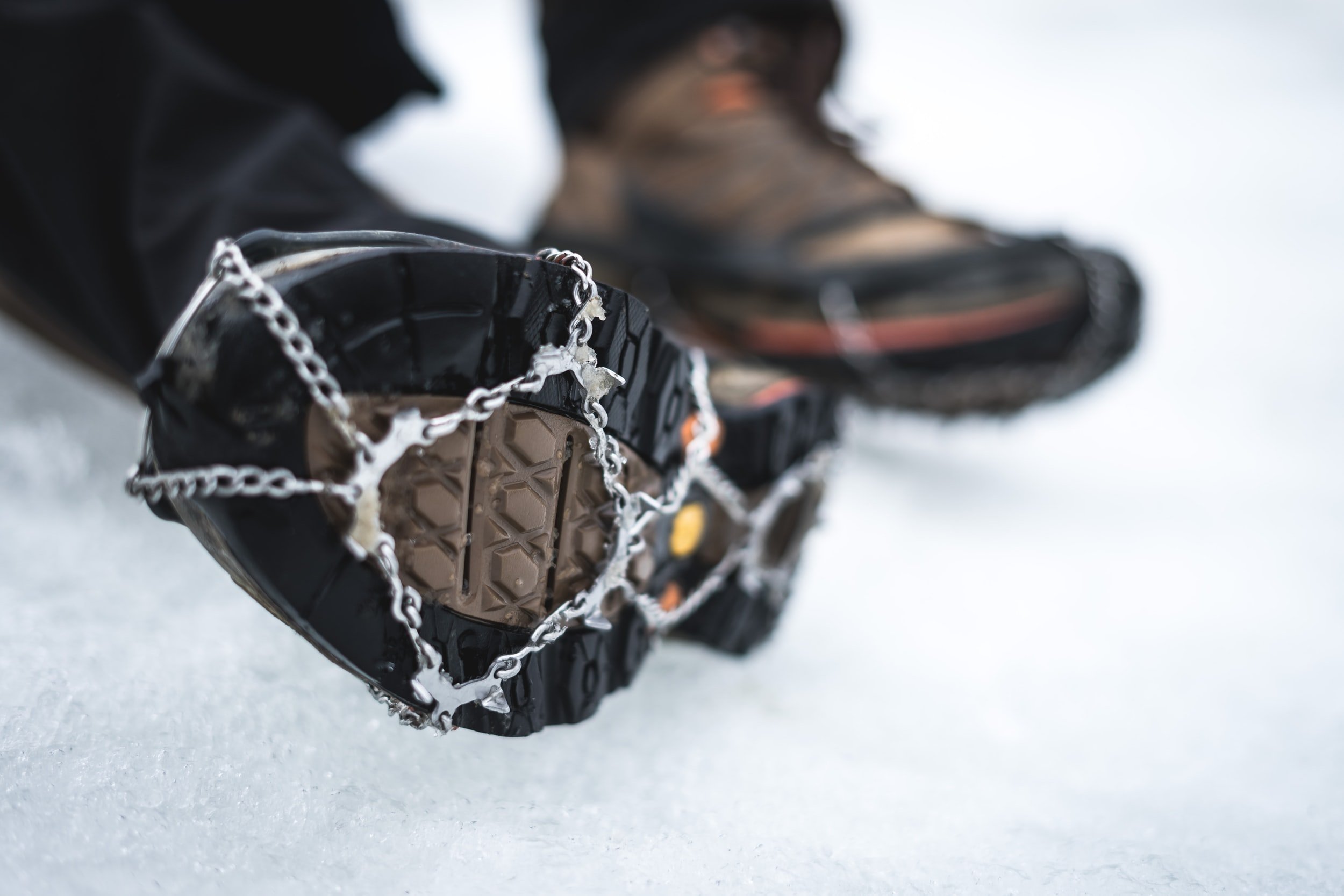
Get a better grip this winter (Photo: ice cleats with small spikes/teeth attached to a pair of winter boots)

One of my clients fell and broke her hip last year. Needless to say, it was a traumatic and painful experience for her and her dog (she dropped the leash, he ran away, and people chased him - he’s a very nervous dog, so this was very scary for him.) 

This year, she wanted help teaching her dog how to walk nicely on the leash. 

Last week’s blog post was loaded with tips to help your dog walk better on the leash. 

This week, we’re talking about ice cleats to prevent you from falling on the ice whether you’re walking your dog or shovelling your driveway. 

Ice cleats fit overtop of your boots (or shoes) to provide traction as you walk on ice and packed snow. 

I purchased my first pair roughly fifteen years ago. They were made by Yaktrax and were the coil design. 

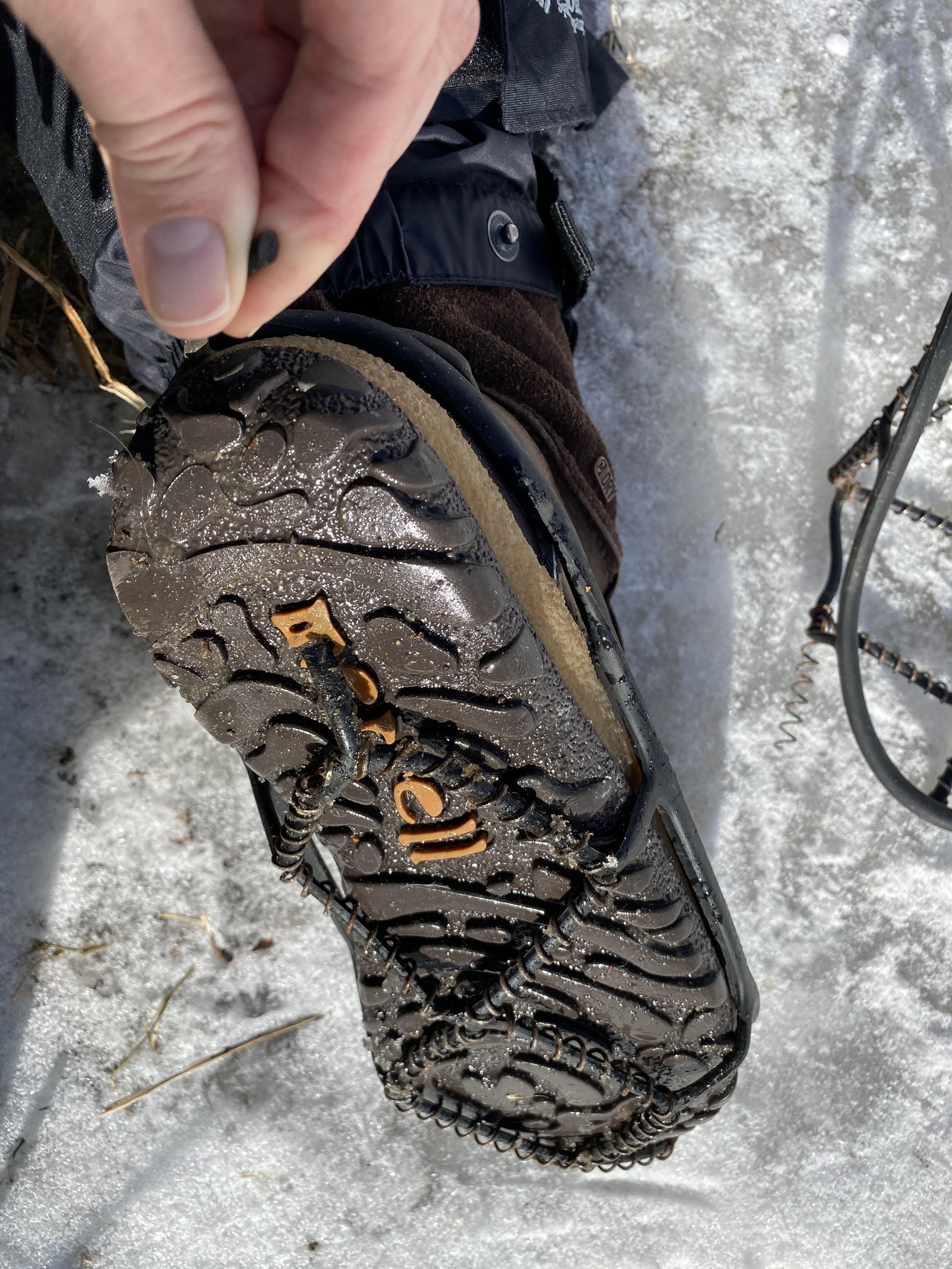
Time to research and replace this pair of Yaktrax (Photo: my rusty, ancient pair of Yaktrax coils with the rubber snapped attached to my winter boots)

They functioned really well, except for on snow-covered sports fields, where they would constantly fall off. Yaktrax recently added a strap across the top of the foot, so they reportedly no longer fall off in deeper snow. 

Coils provide a good grip on ice and packed snow, but they are insanely slippy on asphalt (and heaven help you if they uncoil a little bit and you have a runner mat inside your home.) 

I continued to use this pair of coils even once the rubber on the bottoms had snapped. Despite no longer covering the entire bottom of my boots, they still functioned fairly well, until I tried them after an ice storm. After sailing along on my back alongside Magic for a good ten feet, I decided to (finally) research and replace this pair. 

You can go down a real rabbit hole while reading reviews online, so allow me to save you some time. 

After many hours reading reviews and asking friends and random strangers about their experiences and preferences, I realized that what I really needed was to talk to an expert. I spent an afternoon chatting with a very knowledgeable staff member at Atmosphere in Guelph, ON. He owns three different pairs of ice cleats for three different sets of conditions (including a pair for ice fishing.) Here’s his advice based on all of the clients he’s served over the years and his own personal use (and yes, he has a dog.) 

Which cleats will suit your lifestyle the best? (Photo: person hiking beside a frozen waterfall with an off-leash dog)

We discussed coils first. I told him I had read a lot of reviews that said that the rubber on the bottom of the Yaktrax is still breaking really quickly. There’s also a lot of reports online that the coils are getting rusty almost immediately. 

Atmosphere’s resident guru said that perhaps the people who wrote these reviews purchased the wrong size and didn’t follow the care instructions. You’re not supposed to put ice cleats away wet. 

I was super interested to learn about cleats (the kind with tiny spikes,) because they are very popular with all of the dog walkers who I’ve met while walking in the forest. Yes, I stop people all the time to ask about their ice cleats. 

The gentleman I spoke with said that Korkers Ultra Ice Cleats are a great solution for dog walking in the city because they aren’t as slippery on asphalt compared to coils and cleats with large spikes. 

Here is a view of the top and the bottom of Korkers Ultra Ice Cleats (Photo: a pair of Korkers ice cleats sitting on a festive Christmas tree skirt)

The drawback to cleats is that sometimes a spike falls off while you’re walking and you don’t feel it let go. He suggests buying a backup set of spikes, so if one falls off, you have a spare ready to go. 

Cleats wear down, so they don’t usually last more than one season if you wear them as we city dwellers do, on terrain that is part ice, part packed snow, and part asphalt.  

What I personally love about Korkers is the design. They have a strap on the back that’s very similar to what you find on snowshoes. It tightens to your boot, so you can wear it on your snow boots or toss them on your Blundstones in milder weather. 

When I’m researching a product, I want to learn it all, so naturally we talked about spikes next. 

These are what spikes look like. (Photo: ice cleats with spikes/teeth attached to a pair of winter boots)

Spikes are the ice cleats that look like huge metal shark teeth. His advice about spikes was that they are amazing on ice. He wears them exclusively for ice fishing because they are quite heavy and would be dangerous on asphalt. He also said most people don’t find the heavy duty spikes super comfortable over long distances, so they may not be the best choice for long walks in the forest with your pups. 

Personally, I don’t love the idea of giant spikes being anywhere near my dog’s paws as I trudge up icy hills in the forest. 

I also thought it would be very impractical for most hikes, because you usually have to cross a street to get to the trailhead. One of my favourite trails is off of a busy road (it’s an 80 Km speed limit where people drive at least 100 Km/hr) and there’s a bend in the road, so you often have to hustle across at light speed.

The hike begins with a steep icy hill. 

I imagined taking off my gloves to yank the spikes onto my wet boots in minus thirty Celsius while standing on the edge of this busy road and thought: spikes are not for me. I definitely wanted to be able to put my cleats on while sitting in the car and safely cross the road to get to my favourite trail. 

What did I purchase? 

Ultimately, the Yaktrax lacked the ability to adjust the size, so this writer went with Korkers cleats. 

Magic is ready to walk and I am ready to test these out (Photo: Magic the Rottweiler posing with the author’s boots and Korker’s Ultra Ice Cleats)

Leave it to Guelph that I purchased them in December and have only needed wear them once so far, so I can’t say for sure how they perform over the longterm. 

I can say that I tested them on icy sidewalks and a ramp and I didn’t slip at all. And yes, I went up and down that ramp several times just for fun. 

Remember that how you FEEL matters very much to your dog. If you’re walking along trying not to fall and worrying about breaking bones, your dog will take the lead. 

If your dog is a back-of-the-pack (sensitive to noises, on the nervous side) they will be super stressed out taking this job from you. 

If your dog is reactive on leash, it will not improve until you take the lead on the walk. If you’re walking worried, I recommend some ice cleats to help you walk with confidence. It will make a huge difference to how your dog perceives your energy. 

Calm and confident leadership all the way! 

Have a wonderful (and grippy) weekend, Dog Leaders! 

Alyssa 

PS Do you use ice cleats? Which ones do you like the best?

PPS Yaktrax now makes ice cleats that are half coil and half cleat. The gentleman working at Atmosphere and I are both curious about how they will perform. Let us know in the comments if you’ve tried this combo cleat.

Photos by: Patrick Schneider @patrick_schneider (ice cleats with small spikes/teeth attached to a pair of winter boots,) Alyssa Foulkes (my rusty, ancient pair of Yaktrax coils with the rubber snapped attached to my winter boots,) Will Swann @wlll (person hiking beside a frozen waterfall with an off-leash dog,) Alyssa Foulkes (a pair of Korkers ice cleats sitting on a festive Christmas tree skirt,) Patrick Schneider @patrick_schneider (ice cleats with small spikes/teeth attached to a pair of winter boots, Alyssa Foulkes (Magic the Rottweiler posing with the author’s boots and Korker’s Ultra Ice Cleats,)

TIPS FOR BETTER WALKS

Are you relevant to your dog? (Photo: a person holding a retractable leash with the dog wayyyyyy out in front of them in a forest)

Does your dog pull on the leash? 

It isn’t very much fun to have your arm pulled out of its socket on a daily basis, or to break a hip on the ice (just ask my client who broke her hip last winter!) 

Does your dog spend most of her time on the walk: 

-zigzagging

-peeing on things

-hunting for squirrels/bunnies/birds/other dogs/people 

-lunging at people and other dogs

-chasing cars/cats/wildlife

-looking at everything but you

-pulling your arm out of its socket

-barking at…everything?

One of the reasons your dog is doing this is because you are not relevant. Sure, you’re attached to the other end of the leash, but you’re following behind her. She’s in control of where she’s going. 

Is your dog calling the shots and reacting to everything? (Photo: brown dog wearing a flat collar lunging at the end of his leash)

Because she’s in the front, she’s also in control of making all the decisions and dogs make pretty terrible decisions (and then yank us along with them, hurting our backs, shoulders, wrists, etc.) 

Here are some tips to get your walks back on track: 

  1. The walk begins inside your home. If your dog doesn’t listen to you inside your home when you ask him to do things (sit, go to his bed, drop it, etc,) then he will not listen to you on the leash outside your home.

How to improve your relationship inside your home: 

-follow through  - don’t let your dog blow off commands

-placework - teach your dog to go to his cot and relax until you release him (this prevents counter surfing, stealing the kid’s socks, and barking out the window) 

-wait until your dog is calm and gives you natural eye contact before leaving home

Wait for calmness and natural eye contact before rewarding your dog with a walk (Photo: a Dachshund looking up at his owner while on leash)

2.    Build trust first. Most people adopt a rescue dog or young puppy and immediately want to go on long walks with their new companion at a perfect heel. If you’ve adopted a dog or puppy who has never worn a collar or leash before, it’s way more important to teach them to trust you and to follow you first, before forcing them on a 5 Km walk and experiencing what many of my clients have experienced (before working with me): 

-the dog stops halfway through the walk and won’t move

-the puppy won’t leave the property at all, so the humans force them or pick them up

-their dog spends the whole walk lunging at dogs, people, and squirrels

-their dog pulls toward every single smell, making the walk no fun for the humans

How to build trust: 

-slow down

-teach your dog to be part of the process (encourage them to move into their gear, don’t just lasso them into collars and shove them into jackets) 

-check out my videos on TikTok, Instagram, and Facebook for help with this

Walking your dog should feel like joy, peace, and calmness (Photo: Author, Alyssa Foulkes and her Rottweiler who is in an off-leash heel position in the forest)

3. Quality over Quantity. It doesn’t matter how far you walk. Leashing up properly, going through thresholds properly, and even walking down your steps properly matters more than how many kilometres you go. You may need to go back and forth on your street while you get the hang of heeling with your dog, and that’s still going to burn physical and mental energy.

How to improve the quality without worrying about the quantity: 

-your neighbours aren’t watching you - you can walk back and forth a few times in front of your house practicing your heel (P.S. If they ARE watching you, they are probably hoping to get some tips that will help them with their own dog.) 

-focus on calmness before the walk and how you move through thresholds just as much as you focus on the heeling when you’re outside


Keep doing your best and you’ll see results. 

Keep showing up every day and you’ll see improvements (Photo: a woman walking beside an Australian Shepherd at sunset)

Check out our IGTV videos to learn more about: 

-fulfilling your dog’s physical and mental needs on walks

-heeling/loose leash walking

-one of the best places to practice loose leash walking 

Our Instagram handle is: @GoBeyondDogTraining

The video series is called: Structured Walks 

Check out our videos for more tips (Photo: woman on her laptop sitting beside a napping Golden Retriever)

We all need to learn, practice, master, and then repeat when it comes to working with dogs. Hands up if you know whose mantra that is: learn, practice, master, repeat. It resonates with me so much. We humans need to remember that last word. We are never finished learning. It is a continuous loop. You know this if you’ve owned dogs your whole life, but have recently adopted a dog who is totally unlike any dog you’ve ever trained and lived with. There’s new skills to be learned, practiced, mastered, and then repeated. 

Happy learning, Dog Leaders! 

Thanks for reading!

Alyssa 

Photos by: Marek Szturc @marxgall (a person holding a retractable leash with the dog wayyyyyy out in front of them in a forest,) Upsplash image (brown dog wearing a flat collar lunging at the end of his leash,) Upsplash Image (a Dachshund looking up at his owner while on leash,) Parry Bast (Author, Alyssa Foulkes and her Rottweiler who is in an off-leash heel position in the forest) Patrick Schätz

@wndrlst_pctrs (a woman walking beside an Australian Shepherd at sunset,) BRUNO EMMANUELLE

@brunocervera (woman on her laptop sitting beside a napping Golden Retriever)

3 GOOD HABITS TO ADD RIGHT NOW

These new habits will help improve your relationship with your dog (Photo: Habits to be Made written in green neon lights)

Last week, we kicked 3 bad habits to the curb. Bye! 

This week, we’re focusing on three habits that we should add right away. 

  1. Reward calmness - you get what you pet. Reward calmness and you’ll get a calmer dog. Calm dogs are easier to live with than excited dogs. Excitement leads to many of the behaviours you don’t like (barking, humping, mouthing, nipping, biting, jumping up, dog fights, chasing the cat, stealing and chewing inappropriate items, and more.) Calm dogs are also easier to walk. Can you say: goodbye, leash reactivity?

Most people forget to reward this state of mind, and only reward pushy, mouthy, jumpy, hyper behaviour. You get what you pet. (Photo: person petting a napping Mastiff.)


2. Clear Communication - Write down a list of commands that your dog knows. Work on expanding the list. The more things she knows how to do, the better your relationship will be. The list will also help anyone who lives with you and your dog to use the same commands. This avoids confusing your dog. She may not be a selective listener after all.

      Pro Tip: Be sure that “leave it,” “drop it,” and “come” are on your list. These three commands are a must for dog owners.  

Bonus points for writing down your goals as well (Photo: a hand writing a checklist on a piece of paper)

Recall - Recall saves lives. Practice recall at every mealtime. You can practice with your dog’s leash on at first. Then use a longline. Then practice in your yard or on your deck (with a leash or longline.) If you never practice recall, how will you call your dog off that skunk, away from that bunny poo, or away from that busy street?

Practice how you play. On game day (the day a car is about to run your dog over) you will be thankful for having practiced recall every day (Photo: Golden Retriever mix running toward camera through a field of grass and orange flowers)

These new habits will make your relationship so much better. 

A calm dog is easier to walk, so now you can enjoy your walks with your dog again. No more pulling, lunging, and barking on walks. 

A dog who understands what is being asked of her, has a job to do, and is being taught new things (engaged) is a joy to live with. 

Recall saves lives. Practice it daily because one day you’ll need it. 

Have a wonderful weekend, Dog Leaders! 

Alyssa

Photos by: Drew Beamer @drew_beamer (Habits to be Made written in green neon lights,) Upsplash Images (person petting a napping Mastiff,) Glenn Carstens-Peters @glenncarstenspeters (a hand writing a checklist on a piece of paper,) Peter Schulz @visionaryconcepts (Golden Retriever mix running toward camera through a field of grass and orange flowers,)

Bad Habits to New Habits

It’s time to make some new habits to help your relationship with your dog blossom (Photo: The word “NEW” painted on a coral-coloured wall)

It’s time for change. Can you feel it? 

This isn’t about New Year’s Resolutions, this is about your life and your relationship with your dog. 

You’ve got some bad habits. We all do. But these ones are hurting you and your dog, so it’s time to let them go. 

BAD HABITS THAT WE ARE KICKING TO THE CURB TODAY (NO MORE EXCUSES!): 

  1. Backyard Freedom:

You let your dog out to “exercise” in the backyard, but you don’t walk her. 

When she’s outside, she barks at the neighbours, chases squirrels, barks at everyone who walks by your home, and when the neighbour’s dog is out, she runs the fence line with him, destroying your garden. She also digs holes. Sometimes she even guards the holes!  

She doesn’t come from the backyard when you call her, in fact, she comes partway and then takes off like it’s a game. This leads to you swearing, throwing on winter boots, stomping after her, and then giving her a time out in the bathroom or her crate. 

All of this stops today. 

Your dog is ALWAYS learning. If you’re allowing this behaviour, you are agreeing with this behaviour. 

What to do instead: 

-accompany your dog into the yard for all bathroom breaks

-walk her every day (loose leash walking, not her out in front leading you) 

-leave a longline on your dog when you’re in the backyard together to prevent her from blowing off your recall command

-teach your dog how to come when called (practice indoors and then work in more distracting environments with the longline until she is rock solid) 

Giving too much freedom too fast is a very common mistake made by dog owners. Keep the longline on until your dog listens to you the first time you call. (Photo: terrier carrying a tennis ball in her mouth. She is wearing a blue harness and blue long line.)

2.    Not Being Present: 

You walk your dog, but you’re on your phone the whole time. She’s out in front, zigzagging, tying you up with the leash, barking at other dogs, and yanking you into traffic. 

What to do instead: 

Leave your phone at home. Dogs are a gift that reconnect humans to nature. Accept the gift. 

Set down your phone and reconnect with yourself, your dog, and nature. (Photo: person cross country skiing with their dog in the mountains)

3.    Being Inconsistent: 

You mean to walk your dog every day, but some days (okay, most days) you’d rather snuggle and watch movies on the couch. You know you’re supposed to teach your dog how to be alone because you’ll be going back to work in the office soon, but it’s so much nicer to let her sleep on your feet or on your lap. You know you shouldn’t pet your dog when she puts her front feet on your chest, but she looks so cute that you do it anyway…and then yell at her when she does it to your Grandma. 

What to do instead: 

-be a consistent leader (Being a consistent leader takes stress off of your dog. If the only way she can self-soothe is be close to you/touching you, she is very unhealthy and can’t be left alone.)

-teach your dog to love placework

-teach your dog to love being in her crate 

-walk her every day (loose leash walking, not her out in front leading you — she isn’t equipped to be your leader and it’s stressing her out) 

-make rules (dogs aren’t allowed to put their front paws on humans) and make sure that everyone in your home follows the rules

This is the year that you are going to put in the work and see the results. 

This is the year that you’re going to learn how wonderful living with a fulfilled dog is. 

This is the year that your dog becomes your dream dog. 

She is smart. 

She can do it! 

And so can you! 

Kick those bad habits to the curb and schedule your free call today. Click the TAKE ACTION button. 

Taking action feels good. 

Have a wonderful weekend, Dog Leaders! 

Alyssa 

Photos by: Upsplash Images (The word “NEW” painted on a coral-coloured wall,) Upsplash Image ( terrier carrying a tennis ball in her mouth. She is wearing a blue harness and blue long line,) jasper guy

@jasperguy (person cross country skiing with their dog in the mountains,)

New Year’s Eve Tips

Read on for tips to keep your dog safe during your New Year’s Eve bash (Photo: dog wearing a party hat)

Are you hosting a party? Do you want to keep your dog safe during the party? 

Of course you do! 

No one wants their dog to eat a gummy and suffer through THC poisoning (AKA cannabis/marijuana intoxication.) 

No one wants their dog to feel so afraid that her only option is to bite your friend (who cornered your dog to try to pet her.) 

No one wants their dog to chew up their sister’s favourite boots — you will never hear the end of it AND your dog could need surgery to remove the pieces!! 

Crate, place, or on a leash with you prevents undesirable behaviours. Period. (Photo: Golden Retriever with a brown dress shoe in his mouth

All dogs are different. Some dogs are nervous and don’t like people invading their personal space. Advocate for these back-of-the-pack dogs by: 

-teaching your guests how to practice the correct way to greet dogs (no touch, no talk, no eye contact until your dog is calm and YOU say it’s okay for them to interact — and if your dog doesn’t want to interact, that’s fine. Advocate for their personal space.) 

-placing your dog in her crate in a quiet room (be sure to fulfill all of her needs beforehand — structured exercise, so she’s ready to go into a resting and relaxing state

-placework — If you’ve been practicing placework with distractions (i.e. your dog has relaxed on place when you’ve had small gatherings of people, rowdy kids over to your home, and dinner parties,) you may decide to work on place during this party. If you’re working on place, you’re sober and in training mode (this doesn’t mean you can’t have fun — dog training is fun, remember?!) This mindset will make it easier for you and fair for your dog. You may need to use a leash, even if training without one is going well on an average day at home. There will be way more distractions tonight, so a leash is always a helpful tool.  

*Remember: Place is a do not disturb zone. Drunk friends (or sober friends) are not allowed to lie down beside your pup on her cot. Period. 

Place is your dog’s safe space to relax and be calm. (Photo: brown pitbull puppy sitting on a dog bed)

Sad because you’re going to be training instead of fully engaging with your guests? Look at it this way: Once your dog learns how to behave at parties (go to place and be calm when guests arrive; calmly lay around and be petted by guests; play with guests without jumping/mouthing/biting etc) your life and your dog’s life will be awesome. You’re doing this training to be kind to your dog. Your dog deserves to be taught how to live calmly alongside you and your friends and family. 

Puppies and rescue dogs don’t come pre-programmed to know how to behave calmly in the human world. By adopting them, it becomes your job to teach them. It is a gift. 

Advocate for your dog around people who are under the influence of drugs and alcohol. Keep your dog safe. (Photo: eight people doing cheers with fancy drinks)

A lot of bites happen when people have been drinking. Set your dog up for success if she is nervous or has a bite history — use the crate. Do not let anyone bother her when she’s in her crate. 

If your dog is happy-go-lucky and attending the party, there’s still lots to do to keep her safe. 

-make sure THC gummies are not left lying around

-don’t allow counter surfing tonight if you don’t want her to continue this in the future

-your rules are your rules — if you don’t allow jumping up, don’t make exceptions for anyone. “You may pet my dog when she is calm and has all four paws on the floor.” It’s okay to have rules. They keep your dog safe and prevent Great Aunt Mary from breaking a hip next time she visits because the dog now thinks jumping up on people is fair game. 

To help you with your guest greetings, be sure to check out this post: 

https://beyonddogtraining.ca/news/guest-greetings

Happy New Year, Dog Leaders! 

Alyssa 

Photos: Yvonne Assen @yvonneassen (dog wearing a party hat,) Upsplash Image (Golden Retriever with a brown dress shoe in his mouth,) Upsplash Image (brown pitbull puppy sitting on a dog bed,) Helena Yankovska @helenayankovska (eight people doing cheers with fancy drinks,)

"Leave it" vs. "Drop it" Holiday Edition

Want your dog to leave that ornament or decoration alone? Read on! (Photo: dog wearing a Santa hat yawns at the camera)

Last week’s blog post was filled with tips to help us teach our dogs not to chew our holiday decorations. 

If you have a puppy or rescue dog, you need to teach them these important life-saving commands: “leave it” and “drop it.” The important part of that sentence is “teach them.” Many new pet parents follow their puppy around yelling “leave it” when the puppy grabs a shoe, starts chewing a couch cushion, or snags a Christmas ornament. Yelling doesn’t help. Imagine if math teachers simply yelled at their students: “wrong” every time they answered a question incorrectly. There’s no teaching going on there and no one would learn anything, other than “this human yells a lot.” 

“Leave it” and “drop it” are different from each other. Read on to learn why you should teach your dog both of these commands.

When your dog knows “drop it” or “aus,” fetch becomes a lot more fun for both of you (Photo: Golden Retriever holding a spiky blue ball in his mouth)

Do you know the difference between “leave it” and “drop it?” If you’re not sure, then you’ve come to the right place. After all, if you’re confused about which is which, then your dog may be confused too. 

These two commands, along with recall (teaching your dog to come to you no matter what) are three of the most important things you should teach your dog. 

Leave It communicates to your dog “don’t touch that with your mouth.” It could be toxic for your dog (joints, edibles, grapes, chocolate) or simply something you would like to enjoy later on yourself (like the steak on your countertop or the butter tarts on your kitchen table.) This same command applies to dead things on the ground, bunny poops, goose poops, and, you get the idea. 

“Leave it” allows you to pick up the ball, without your dog snatching it up and playing keep-away (Photo: Border Collie lying on the grass looking at a tennis ball a few feet away from her)

I’ve been working with a lot of people who have new puppies. They are walking behind a twelve-week-old puppy yelling “leave it” as the puppy investigates the leash, the shoe on the floor, and the children’s toys. 

When I ask: “Does she know what you mean? Have you taught her how to “leave it?” the answer is always, “Isn’t this how you do it?” 

In a word: no. 

If I were your piano teacher and you were a brand new student, it wouldn’t be very effective for me to yell at you when you begin to innocently press the keys. You didn’t even play a wrong note yet, but I’m yelling at you with all these big piano-genius words that you don’t understand. Not exactly an effective teaching style. 

If you would like to learn to teach your dog to “leave it,” I have three videos on TikTok right now to help you. Find us on TikTok @BeyondDogTraining. 

Side note on “leave it”: I have heard a lot of trainers using “leave it” for passing by a dog, cat, squirrel, or bunny as well. Personally, I use “on by,” but “leave it” seems quite effective for them. Choose your own adventure. 

You may wish to use “leave it” for squirrels as well. Whatever you choose, be consistent. (Photo: a black squirrel and a grey squirrel eating nuts on a lawn)

Drop It: Drop it, or Aus (which is German for drop it/out,) is the command you teach so that your dog knows to drop things out of her mouth when you ask. This could be a dead thing she picked up on a walk, your children’s toys, her ball (during fetch, so you can throw it again,) her bone, another dog’s toy, your remote control, etc.)

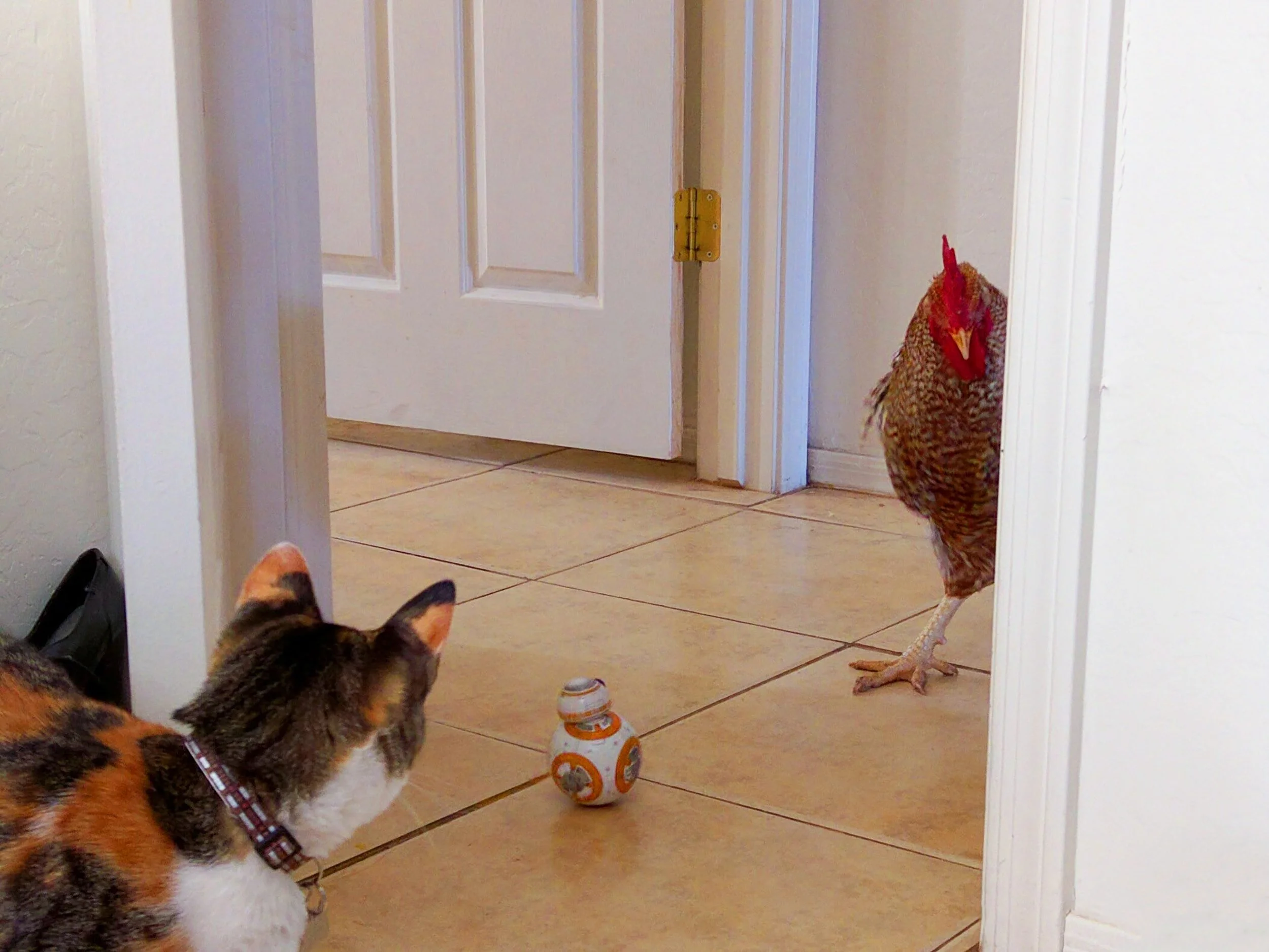
If your dog knows “leave it” and “drop it,” your cat and rooster will finally be able to play in peace (Photo: a calico cat and a rooster looking at a bb-8 droid toy on the kitchen tiles)

The earlier you teach these commands the better. It’s far easier to teach your dog to never touch steak on the counter from day one, than it is to train them not to once they’ve developed a habit of it (and get a very tasty reward of steak every time they do!) 

All dogs can learn these commands regardless of how old they are. It’s never too late to begin training your dog. I promise you, he’s smarter than you think. 

It’s never too late to teach your dog these life-saving commands (Photo: senior Collie holding a dirty tennis ball)

Have a wonderful Christmas Eve, Dog Leaders! 

Alyssa 

Photos by:Danny Bezak @harvison (dog wearing a Santa hat yawns at the camera,) Elisa Kennemer @elisalou (Golden Retriever holding a spiky blue ball in his mouth,) Robin Jonathan Deutsch @rodeutsch (Border Collie lying on the grass looking at a tennis ball a few feet away from her,) Claudia McMahon @scmcmahon (a black squirrel and a grey squirrel eating nuts on a lawn,) Daniel Tuttle

@danieltuttle (a calico cat and a rooster looking at a bb-8 droid toy on the kitchen tiles,) Tadeusz Lakota

@tadekl (senior Collie holding a dirty tennis ball)

Dogs and Decorations

Does your dog chew things he’s not supposed to? (Photo: French Bulldog lying down with colourful lights)

Do you love the holidays? Do you love decorations? Are there a few decorations that you feel you can’t bring out because your dog will chew them up? Has your dog already chewed up your favourite decorations? Let’s put a stop to this, shall we? 

Here are a few tips to help you teach your dog what he’s allowed to chew and what he is not. 

What you allow, you agree with. Read that twice. (Photo: French Bulldog chewing red ribbon)

  1. What you allow, you agree with: If you allowed your puppy to take Christmas ornaments off of the tree because it was “cute” you accidentally taught him that he was allowed to take ornaments off the tree. Oops. Remedy this by teaching your dog the “leave it” command, so that you can let him know not to touch things you don’t want him to touch.

Dogs are always learning. What are you teaching in this moment? (Photo: Chihuahua mix sitting on a chair with a red cushion)

2. Consistent Boundaries and Rules: If you accidentally allowed your dog to chew your sheets, couch cushions, shoes, and bath towels, he will not know to leave your Christmas decorations alone. Dogs need consistency from us in order to succeed. If your dog has no idea that he shouldn’t chew your bed sheets, he should not be allowed on your bed. Obstructions can sometimes be repaired by your veterinarian, and sometimes they can’t. Don’t risk your dog’s life. Teach them what they can chew (dog toys and bones) and what they can’t (your couch, bed, shoes, table legs, cat’s toys, baseboards, purse, kid’s toys, etc) Supervise your dog at all times so you can teach him what he can and cannot chew.

Crate Time: Dogs are den animals. If you take the time to teach them to love their crate, they will. The crate provides a safe place for your dog when you need to shower, do groceries, or go to work. When your dog is in his crate, he can’t eat your couch, the remote control, or your holiday decorations.

Braxton used to shriek in his crate and was on medication that wasn’t working. His first trainer didn’t help. So grateful that his owner refused to give up and found me. (Photo: 14-week-old Braxton the Frenchie X enjoys his first nap in his crate with the door closed)

Be sure you are consistent outside your home as well. I recently helped a family with a Labrador Retriever who chewed up an outdoor decoration made of plastic and lights. They were unable to get the decoration back from him. He ran around and around the yard playing keep away and then ate the decoration. If your dog doesn’t have rock-solid “drop it,” “leave it,” and recall commands, do not let them off the leash. Longlines are amazing. Think of them as training wheels for dogs. You and your dog need to practice together until the training wheels come off. You get out what you put in. You must do the homework to see the results. 

Use a leash or a longline as you teach your dog what he is allowed to chew and what he is not (Photo: Running dog catches a tennis ball. He has a leash trailing behind him on the ground)

Have a safe holiday season, Dog Leaders! 

Alyssa 

Photos by: Karsten Winegeart @karsten116 (French Bulldog lying down with colourful lights,) Jakob Owens

@jakobowens1 (French Bulldog chewing red ribbon,) Camila Camacho

@camilasbeing (Chihuahua mix sitting on a chair with a red cushion,) Alyssa Foulkes (Braxton the Frenchie X enjoys his first nap in his crate with the door closed,) Upsplash Image (Running dog catches a tennis ball. He has a leash trailing behind him on the ground.)

Place Command: Construction Edition

Find out how to keep yourself and your dog calm with this on your front lawn (Photo: Backhoe digging gravel.)

Welcome to Place Command: Construction Edition. Read on to learn about the place command and how it can help you and your dog through all sorts of chaotic and loud situations.

As long as all four feet are off the ground and your dog is calm, you’re teaching the place command properly (Photo: Labrador Retriever puppy lying on a dog bed)

If you’ve never heard of the place command, you’ve come to the right place…pun intended, since it made it past the editing stage. Sorry not sorry. 

When we live with dogs, we sometimes end up telling them to stop barking out the window, or stop chasing the cat, or stop stealing food off of the countertop. What we don’t do, is provide direction to our dog of what we would like them to do instead of that undesirable behaviour.

Sometimes, we do ask our dog to do something else. How many of you have asked your dog to lie down on the floor or their dog bed, only to find they get up two seconds later and head straight back to that undesirable behaviour they were doing before?

We’ve all been there. 

Didn’t I just tell you to go lie down?!?!? What are you eating? (Photo: black pug licks a mat on the floor while a toddler wanders in the background)

Your dog’s state of mind is more important than you think. When you only address the dog’s body position, “Go lie down,” they lie down, but it doesn’t last because they are not in the right state of mind — calm. They are often still fixated on the noise they hear outside, or rip-roarin’-ready to chase the kids up the stairs again. As soon as you walk away or sit back down on the couch, they’re off like a rocket. It can be very frustrating. 

Ready for some good news? Once you properly teach the place command, this “getting up and heading straight back to business” won’t happen anymore.

Why? 

Because place is an implied down-stay that your dog has to be released from. No more strolling away to pester the cat, searching for shoes to chew on, or stealing the kid’s socks. You’re giving her a job: stay here until I say so. Read on to find out why that job actually feels good to your dog. 

Here’s how it works. 

The place command provides your dog a safe, quiet place to go and relax. It’s very natural for dogs to be calm. It feels good to them, so your dog will actually want to hang out there. In fact, sometimes they’ll go to place all on their own and take a nap. 

The easiest way to teach place to your dog is on an elevated dog cot. Because it is raised off the floor, it creates a clear boundary to your dog. 

You can use an elevated dog cot, or a nice thick bed like this one (Photo: pitbull puppy sitting on a thick dog bed)

The elevated dog cots prevent this — your pup’s feet shouldn’t be touching the ground while teaching place (Photo: terrier on a dog bed with his two front feet touching the floor)

You can use the place command: 

-to greet guests at your front door (your dog stays in place, and no one gets jumped on or nipped —YAY!) 

-to add structure to your regular day — send them to relax on place after mealtimes and after training sessions

-to keep your dog safe — if you break a glass in the kitchen, send them to place while you clean up the pieces

To learn more about place, head to Instagram and check out our highlighted stories and our most recent Live https://www.instagram.com/gobeyonddogtraining. The Live brings you into my home on a day when there is construction right outside our front door. There’s a Badger digging up dirt for hours. Learn how your own mindset is connected to your dog’s mindset and how to achieve a quiet home even when outside is LOUD!

There’s also a helpful video about Place & Construction on our TikTok. Visit us there at BeyondDogTraining.

Happy training, Dog Leaders! 

Alyssa 


Photos by: Gerold Hinzen @geroldhinzen (Backhoe digging gravel,) Taylor Kopel @taylorkopel (Labrador Retriever puppy lying on a dog bed,) Charles Deluvio

@charlesdeluvio (black pug licks a mat on the floor while a toddler wanders in the background) Jordan Bigelow @jordanbigs (pitbull puppy sitting on a thick dog bed) Mitchell Orr

@mitchorr (terrier on a dog bed with his two front feet touching the floor.)

I WANT MY DOG TO LISTEN TO ME

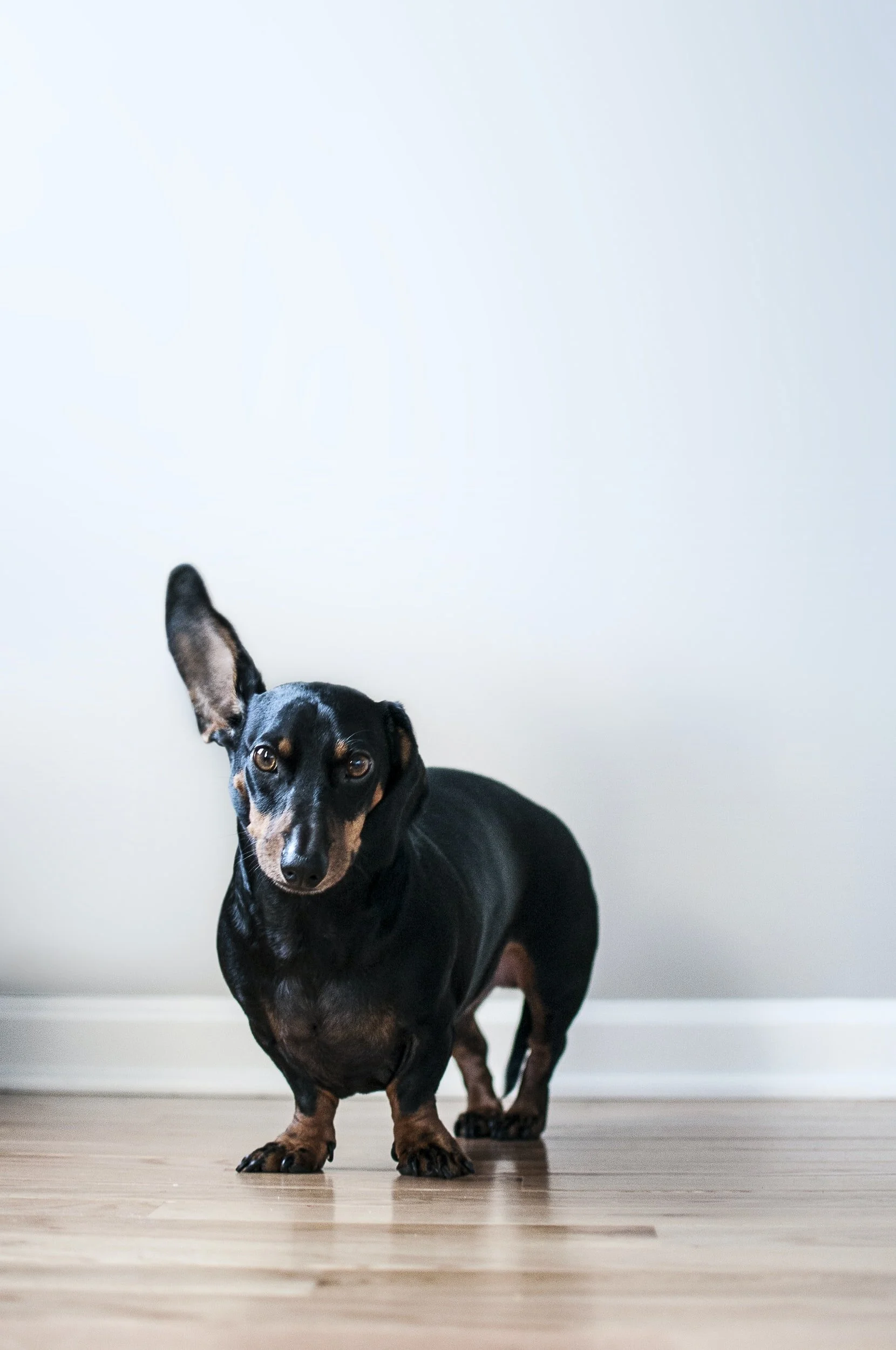
Ever feel like your dog doesn’t listen to you? (Photo: Dachshund with one ear up and one ear down)

Does your dog race to your back door only if you have a treat? 

Do they ignore your commands when they’re outside? Especially if they’ve found some yummy bunny poop? 

Ever feel like your dog has no idea that you’re actually at the other end of the leash? 

Here are three tips to help: 

  1. EYE CONTACT: You need to become relevant to your dog. You know the way you feel when your friend is on her cellphone and completely ignoring what you have to say even though you’re sitting right beside her? You’re not relevant to your friend in that moment. You don’t have her eye contact. It’s the same with dogs. Before you leave the house for your next walk, wait for your dog to look up at you. You are the gatekeeper to the outside world. Calmness and eye contact are the price of admission to a fun walk outdoors with you.

    Pro Tip: The key to eye contact is patience. We’re not waving food around our eyes and talking excitedly. Stay silent. Your dog will naturally look up. It’s worth the wait.

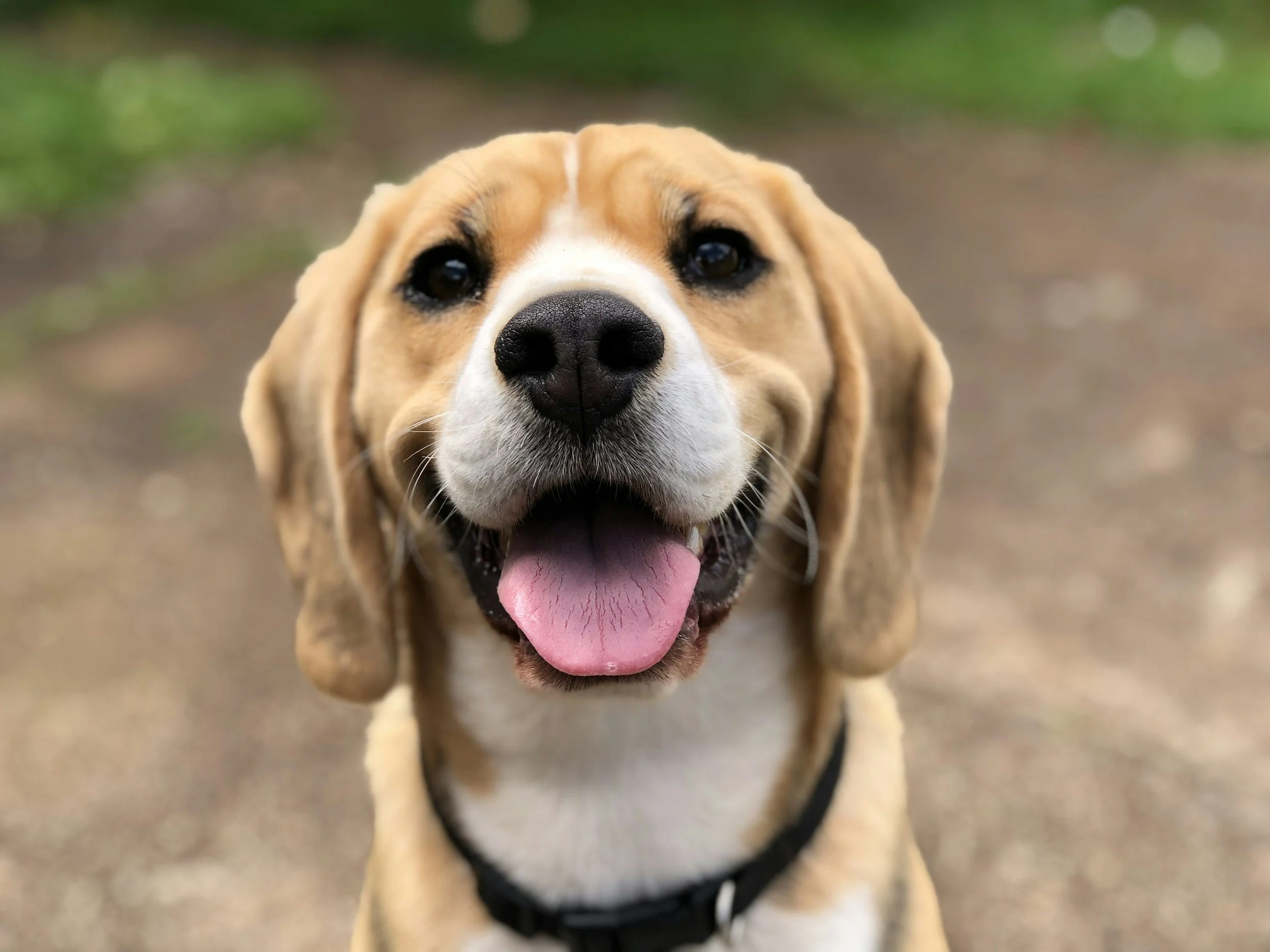
Be patient and wait for eye contact from your dog (Photo: Beagle giving perfect eye contact)

2. CONFIDENCE: Dogs require leadership. A coach. Someone they can trust to help them safely navigate the human world. Someone who pays attention during walks, is aware of traffic and other hazards, and will advocate for their safety. Put your phone down, tell yourself that you are awesome (because you are), pick up the leash and call your dog over. If they are jumping all over you, (that is disrespectful in the dog world) put the leash away and try again in a few minutes. It doesn’t take long to teach a dog that jumping on you is no longer tolerated. If your goal is a dog who listens to you outside during walks, you must teach them to listen to you inside first.

3. CONSISTENCY: If you allow your dog to jump all over you on the couch, she will be confused when you don’t want her to jump on you while you put her leash on. The key is consistency. Be the leader at all times. You’re not her littermate, you’re her boss.

Dogs are pack animals who are designed to listen to calm and confident leaders. If you allow her to practice behaviours that would be disrespectful in the dog world (like allowing her to jump on you, nip you, nudge you for attention 24/7,) she won’t view you as a leader. If she doesn’t view you as her leader, she will continue to blow off your commands.

Pro Tip: Keep a leash on your dog inside your home. It can trail along behind her on the floor. If you ask her to do something (come, leave the food on the counter alone, or sit) and she ignores you, calmly pick up the leash and follow through until she does what you asked. Always supervise your dog when she’s wearing a leash in your home (so she doesn’t chew it up or get caught on anything.)

If you reward this behaviour, you will see more of this behaviour. (Photo: Shiba Inu being rewarded with a treat for putting her front paws up on a person’s legs)

If you’ve never owned a dog before and you find your dog isn’t listening, be sure that you’re being clear and consistent. Keep a list of commands on your refrigerator and ensure that everyone who lives with your dog uses the same commands. This avoids confusing your dog.

If you need a little help, find a behaviourist who understands how to coach dogs AND people across the finish line.

Schedule a free call with us and find out how we can help you become a better leader for your dog.

Have a wonderful weekend, Dog Leaders!

Alyssa 

Photos by: Erda Estremera @erdaest (Dachshund with one ear up and one ear down,) Marliese Streefland

@marliesebrandsma (Beagle giving perfect eye contact,) billow926

@billow926 (Shiba Inu being rewarded with a treat for putting her paws on a person’s legs,)